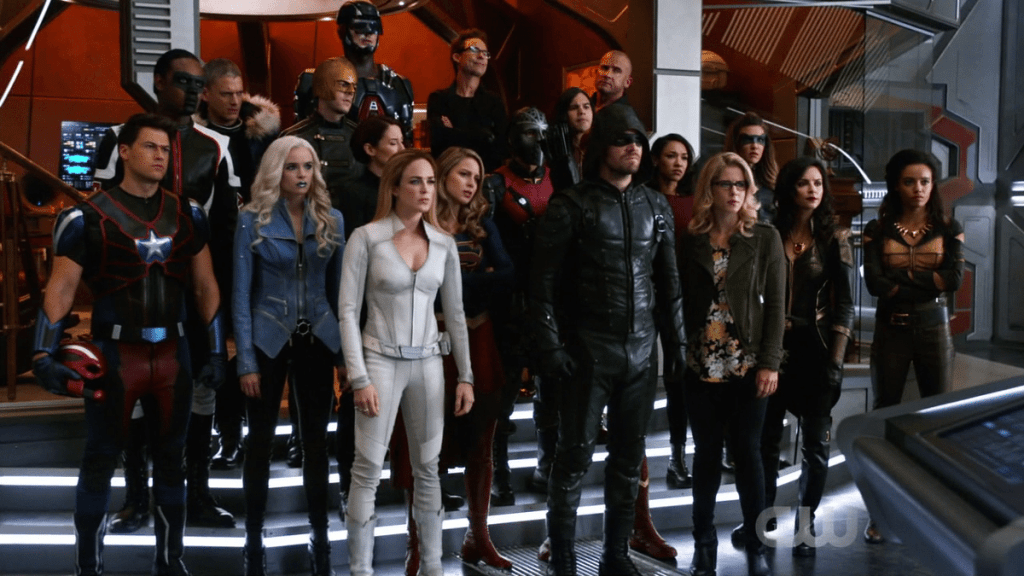
In the ever-expanding world of superhero entertainment, few milestones stand out as revolutionary—moments that not only shift a franchise’s trajectory but redefine the very genre they inhabit. The Arrowverse’s crossovers, beginning with Arrow’s collaboration with The Flash and later Supergirl, represent such a moment. They have achieved what Marvel Studios, for all its cinematic dominance, has yet to truly replicate in the television space: serialized, emotionally resonant, character-driven events that balance interconnected storytelling with accessibility. This blog delves into the Arrowverse’s crossovers, highlighting how they transformed television and delivered an unprecedented sense of unity, spectacle, and heart.
Setting the Stage: The Birth of the Arrowverse
The Arrowverse began humbly with the CW’s Arrow in 2012. Drawing heavily from Christopher Nolan’s gritty Batman trilogy, Arrow told the story of Oliver Queen, a billionaire turned vigilante. Its grounded tone and emphasis on character drama resonated with audiences, paving the way for spin-offs like The Flash in 2014 and Supergirl in 2015. Unlike Marvel’s television ventures, which often felt disconnected from its cinematic universe, the Arrowverse aimed to build an interconnected world from the outset.
While Arrow and The Flash initially operated within their own boundaries, the first true crossover event, “Flash vs. Arrow,” showcased the potential of this shared universe. For the first time, viewers saw two lead characters from separate shows interact organically, combining their distinct tones—the darkness of Arrow with the light-hearted optimism of The Flash.
Expanding Horizons: Supergirl Joins the Fold
When Supergirl premiered in 2015 on CBS, its sunnier tone and external network affiliation made its connection to the Arrowverse uncertain. However, fans’ hopes were answered in 2016 when “Worlds Finest,” a crossover between Supergirl and The Flash, aired. Barry Allen’s journey to Supergirl’s Earth not only established the concept of a multiverse but also set the stage for more ambitious crossovers in the future.
The success of “Worlds Finest” demonstrated the Arrowverse’s commitment to storytelling that was fun, inclusive, and rooted in character dynamics. Unlike Marvel’s Netflix series, which operated in thematic isolation, the Arrowverse embraced the challenge of blending vastly different tones and settings. The result was a joyous collaboration that celebrated the diversity of its heroes without compromising their individuality.
Building the Formula: The Arrowverse’s Unique Approach to Crossovers
The Arrowverse’s crossover model didn’t merely replicate the success of its cinematic counterparts; it forged its own identity. Each crossover event became an opportunity to explore new dynamics, address unresolved tensions, and expand the universe’s mythology. By developing stories that interwove the personal struggles of its characters with larger-than-life threats, the Arrowverse brought a level of depth to its crossovers that was often absent in superhero blockbusters.
For instance, crossovers like “Heroes Join Forces” and “Invasion!” tackled themes of trust and teamwork. These events allowed characters to confront their flaws while uniting against a common enemy. Audiences were treated not only to epic battles but also to heartfelt moments that deepened their connection to the characters.
The inclusion of humor, romance, and drama further distinguished the Arrowverse’s approach. In “Duet,” a musical crossover between The Flash and Supergirl, the narrative blended fantasy with heartfelt character development. This willingness to experiment demonstrated the Arrowverse’s confidence in its storytelling and its understanding of its audience.
The Crossover Revolution: “Crisis on Earth-X”
By the time “Crisis on Earth-X” aired in 2017, the Arrowverse’s crossover events had become television spectacles. Spanning four shows (Arrow, The Flash, Supergirl, and Legends of Tomorrow), this event epitomized everything the Arrowverse excelled at: high stakes, emotional depth, and ensemble storytelling. Unlike Marvel’s cinematic universe, where characters primarily unite to face external threats, the Arrowverse’s crossovers often revolved around deeply personal stakes.
“Crisis on Earth-X” showcased the Arrowverse’s ability to tackle mature themes while maintaining its trademark levity. The story, which pitted our heroes against Nazi doppelgängers from an alternate Earth, was an allegory for the fight against oppression and bigotry. Beyond the action-packed sequences, the event’s emotional core rested on the relationships between characters: Barry and Iris’s wedding, Oliver and Felicity’s evolving bond, and Alex Danvers’ exploration of her identity.
Marvel’s cinematic universe, while unparalleled in scope, often lacks the time to delve deeply into its characters’ personal lives during its ensemble films. The Arrowverse’s television format allowed it to balance character arcs with overarching narratives, creating a richer and more immersive experience.
The Pinnacle of Ambition: “Crisis on Infinite Earths”
The Arrowverse reached its zenith with “Crisis on Infinite Earths” (2019-2020), a crossover that rivaled Marvel’s Avengers: Endgame in ambition and execution. Adapting the iconic comic storyline, this five-part event brought together heroes from across the multiverse, including characters from Arrow, The Flash, Supergirl, Legends of Tomorrow, and Batwoman. It also featured surprise cameos from other DC properties, such as Smallville, Lucifer, and even the DCEU’s Flash, played by Ezra Miller.
“Crisis on Infinite Earths” wasn’t just a celebration of the Arrowverse but a love letter to DC’s legacy. Its interconnected storytelling was unparalleled, weaving together plot threads from multiple shows while delivering satisfying character arcs. Oliver Queen’s transformation into the Spectre and ultimate sacrifice provided the emotional anchor, cementing his legacy as the Arrowverse’s founding hero.
The event’s ambitious scope was matched by its emotional depth. It dealt with themes of loss, legacy, and hope, giving each character a moment to shine. Kara’s leadership, Barry’s resilience, and Sara’s growth as a captain were all spotlighted, showcasing the depth of the Arrowverse’s ensemble.
Why the Arrowverse’s Crossovers Stand Apart
Emotional Intimacy
The Arrowverse’s television format allows for long-term character development, making the stakes in its crossovers feel more personal and impactful. When Oliver Queen died in “Crisis on Infinite Earths,” viewers mourned a character they had followed for eight seasons. This connection is difficult to replicate in feature films, where character arcs are often condensed.
Inclusivity and Diversity
The Arrowverse has always championed representation, with strong female leads, LGBTQ+ characters, and heroes from diverse backgrounds. Its crossovers celebrate this diversity, showcasing a world where everyone has a role to play in saving the day. This inclusivity resonates with audiences, creating a sense of belonging and unity.
Creative Risk-Taking
From musical episodes (The Flash and Supergirl) to alternate realities, the Arrowverse’s willingness to experiment sets it apart from Marvel’s more formulaic approach. Its crossovers embrace this creativity, blending humor, drama, and action in unique ways.
Accessibility
While Marvel’s interconnected universe often requires viewers to watch every film to understand the full story, the Arrowverse’s crossovers strike a balance. They reward loyal fans while remaining accessible to casual viewers. This inclusivity ensures that no one feels left out, regardless of how much they’ve seen.
The Legacy of the Arrowverse
The Arrowverse’s crossovers have set a new standard for superhero storytelling, proving that television can deliver the same level of spectacle and emotional depth as cinema. They’ve also shown that interconnected universes can thrive on the small screen, providing a blueprint for future franchises.
While the Arrowverse has seen significant changes in recent years, its crossovers remain a testament to the power of collaboration, creativity, and heart. As fans continue to celebrate these events, they stand as a reminder that superheroes aren’t just about saving the world—they’re about bringing people together.
Looking Ahead: The Future of Crossovers
As the Arrowverse winds down and other franchises rise to prominence, the lessons it has taught will undoubtedly influence future storytelling. The upcoming Superman & Lois and potential multiverse expansions suggest that the spirit of collaboration is far from over.
Meanwhile, Marvel’s Disney+ series have begun exploring new territory, hinting at a future where television crossovers might rival their cinematic counterparts. However, the Arrowverse’s unique blend of character-driven drama, inclusivity, and creative ambition ensures that its legacy will endure.
In a world increasingly saturated with superhero content, the Arrowverse’s crossovers remind us why we love these stories in the first place: they inspire us, challenge us, and show us that even in the darkest times, heroes can rise—together.


 One Gay Astronaut
Leave a comment