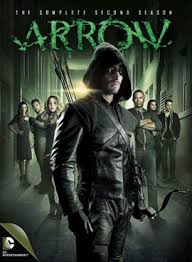
The second season of Arrow is widely regarded as one of the best seasons in the entire series. Premiering on October 9, 2013, and concluding on May 14, 2014, the season took the foundation set in Season 1 and elevated the show to new heights. With improved storytelling, deeper character development, and a menacing villain in Slade Wilson (Deathstroke), Season 2 of Arrow proved to be a defining chapter in the Arrowverse.
Plot Overview
Picking up after the tragic events of Season 1, Oliver Queen (Stephen Amell) is struggling to deal with the guilt of failing to save his best friend, Tommy Merlyn (Colin Donnell), during the Undertaking. He retreats to Lian Yu, the island where he was stranded for five years, but is brought back to Starling City by Diggle (David Ramsey) and Felicity (Emily Bett Rickards) to once again take up the mantle of the vigilante. However, Oliver makes a crucial decision—he no longer wants to be a killer and seeks to become a hero instead.
As Oliver rebuilds his crime-fighting identity, new threats emerge in Starling City. The season introduces the enigmatic and deadly League of Assassins, along with a sinister conspiracy involving Brother Blood (Kevin Alejandro), who is using the dangerous Mirakuru serum to create superhuman soldiers. However, the season’s primary antagonist, Slade Wilson (Manu Bennett), casts the longest shadow. A former ally-turned-enemy, Slade holds Oliver responsible for the death of Shado (Celina Jade) during their time on the island and seeks revenge by dismantling Oliver’s life piece by piece.
Character Development and Performances
One of the most impressive aspects of Season 2 is the depth given to its characters. Oliver undergoes significant growth as he transitions from a ruthless vigilante to a true hero, determined to protect his city without crossing moral boundaries. Stephen Amell delivers a compelling performance, balancing Oliver’s internal conflict, leadership struggles, and emotional weight.
Slade Wilson, portrayed by Manu Bennett, is a standout villain, arguably the best in Arrow’s history. His transformation from Oliver’s friend to his most personal adversary is executed masterfully. His presence is menacing, and his intelligence and combat skills make him a formidable opponent. The backstory of how Mirakuru affected his mind and fueled his vendetta against Oliver adds layers to his character, making him both terrifying and tragic.
Felicity Smoak continues to evolve from the quirky IT specialist into a crucial member of Team Arrow. Her chemistry with Oliver deepens, and their relationship becomes a central emotional anchor for the season. Emily Bett Rickards does an excellent job balancing humor, heart, and tension in her role.
John Diggle remains the moral compass of the team, providing wisdom and unwavering support to Oliver. His own storyline, involving his past with A.R.G.U.S. and his complicated relationship with Lyla Michaels, adds more depth to his character.
Sara Lance (Caity Lotz) makes a powerful return, fully taking on the identity of the Canary. Her history with the League of Assassins, her connection to Oliver, and her struggle to find redemption make her one of the season’s most compelling characters. Lotz brings both physicality and vulnerability to the role, making Sara an instant fan-favorite.
Other characters like Roy Harper (Colton Haynes) undergo significant transformations. Roy, who starts as a reckless vigilante-wannabe, is injected with the Mirakuru serum, leading to serious consequences. His journey to becoming Arsenal is one of the season’s more engaging subplots.
Themes and Storytelling
Season 2 is thematically rich, focusing on redemption, revenge, and the consequences of past actions. Oliver’s struggle to redefine himself as a hero instead of a killer is central to the season’s narrative. The show also explores the idea of legacies—how people’s choices shape those around them, for better or worse. Slade’s vendetta is rooted in the past, highlighting how trauma and betrayal can fester into hatred.
The use of flashbacks remains a key storytelling device, but in Season 2, they are even more effective than in the first season. The island sequences are more gripping, showing how Oliver, Slade, and Sara dealt with the horrors of their time on Lian Yu. The parallel storytelling between the past and present creates a seamless narrative flow that adds emotional weight to Oliver and Slade’s eventual confrontation.
The season also does an excellent job of expanding the Arrowverse. It introduces important DC Comics elements, including the Suicide Squad, Amanda Waller, and the concept of metahumans, setting the stage for future spin-offs and crossovers.
Action and Choreography
The fight sequences in Season 2 are some of the best in the entire series. The show’s stunt work and choreography are top-notch, with fluid and intense hand-to-hand combat scenes. The battles between Oliver and Slade are particularly well-executed, showcasing their equal prowess and personal animosity. The mid-season and finale fights stand out as highlights, delivering high-stakes, emotionally charged confrontations.
Standout Episodes
Several episodes in Season 2 stand out as some of the best in Arrow’s run:
- “Three Ghosts” (Episode 9) – This episode features Oliver’s hallucinations of those he has lost, a shocking return of Slade Wilson in the present timeline, and the moment when Barry Allen (Grant Gustin) is struck by lightning, setting up The Flash spin-off. The emotional weight of Oliver confronting his demons, alongside the action-packed battle against Cyrus Gold, makes this one of the most defining episodes of the season.
- “Heir to the Demon” (Episode 13) – Nyssa al Ghul is introduced, and Sara’s ties to the League of Assassins come into focus. It also marks an important moment in Sara’s character arc as she fights for her autonomy against the League’s influence. The episode explores the dynamic between Nyssa and Sara, revealing a deeper relationship between them, while also raising tensions between Oliver and Sara.
- “The Promise” (Episode 15) – A masterfully crafted episode that showcases the shift in Oliver and Slade’s relationship on the island and sets up Slade’s vengeance in the present. The episode’s structure, which flips between past and present, builds tension beautifully, making it one of the most cinematic episodes of the season.
- “Seeing Red” (Episode 20) – A heartbreaking episode where Moira Queen (Susanna Thompson) meets her tragic end at the hands of Slade, marking one of the most emotional moments in the series. Her final words to Oliver and her ultimate sacrifice add significant depth to her character and drive Oliver towards the final confrontation with Slade.
- “Unthinkable” (Episode 23) – The season finale delivers an epic showdown between Oliver and Slade while also resolving many of the season’s major arcs in a satisfying way. The fight choreography, the emotional stakes, and the flashback sequences aligning perfectly with the present make it one of the strongest finales in Arrow history.
Weaknesses
Despite being one of Arrow’s strongest seasons, it is not without minor flaws. Some subplots, such as Thea Queen’s storyline, feel somewhat underdeveloped at times. The love triangle elements, particularly involving Oliver, Felicity, and Sara, can feel a bit forced. However, these are small issues in an otherwise stellar season.
Conclusion
Season 2 of Arrow is a near-perfect example of how a superhero TV show should be done. With a compelling story, rich character development, intense action sequences, and a memorable villain, it set a high bar for the series and the Arrowverse as a whole. Slade Wilson’s arc remains one of the best villain stories in comic book adaptations, and Oliver’s journey from a vigilante to a true hero is executed beautifully. Even years later, Arrow Season 2 remains a standout in superhero television, cementing its legacy as one of the best seasons in the genre.
 One Gay Astronaut
Leave a comment