Introduction: Shadows Over Smallville
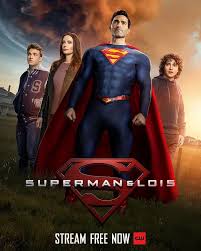
Season 1 of Superman & Lois set an unexpectedly high bar. It redefined Superman not just as a savior of worlds, but as a husband, a father, and a man shaped as much by love and loss as by strength and speed. Season 2 arrives with the daunting task of continuing that story while expanding its mythos, deepening its characters, and tackling new thematic terrain.
Rather than rest on the successful formula of familial drama and grounded heroism, Season 2 takes a bold leap: it descends into the fractured psyche, both literally and metaphorically. From multiversal fractures to mental health, from secrets held between lovers to power lost and regained, this season is more emotionally volatile, more structurally complex, and arguably more ambitious than its predecessor.
Where Season 1 asked what kind of father Superman could be, Season 2 asks: what happens when Superman is no longer whole? What happens when the things we believe about ourselves begin to crack?
The Narrative: Multiversal Shifts and Internal Earthquakes
Season 2 wastes little time before introducing a broader, more metaphysical conflict. A seismic energy source called the Inverse Method becomes central to the plot: a bridge between Earth-Prime and a collapsing parallel Earth dubbed “Bizarro World.” The antagonist of the season, Ally Allston, emerges as a manipulative cult leader who seeks to unify individuals with their alternate universe selves. At first, this premise feels somewhat outlandish, bordering on comic book absurdity. But as the season progresses, it becomes clear that the “Bizarro” concept is a mirror for every character’s internal struggle with identity, duality, and the parts of themselves they suppress.
As the multiverse begins to bleed together, so too do the lives of our characters unravel. Superman begins experiencing strange headaches and visions. Lois finds her journalistic integrity challenged by ghosts from her past. Lana Lang’s family faces emotional upheaval. And the Kent boys, Jonathan and Jordan, continue to navigate the minefield of adolescence, secrecy, and the burden of power.
What’s remarkable is that while the sci-fi stakes expand, the show never loses its emotional grounding. Every cosmic rupture is mirrored by an intimate character fracture. That duality becomes the central motif of the season.
Clark Kent / Superman – The Wounded God
If Season 1 presented Clark Kent as a rock, a man of steady morals and emotional wisdom, Season 2 dares to shake his foundations. From the earliest episodes, we see Superman falter. Not just physically, as he experiences debilitating psychic attacks, but emotionally, as his confidence in himself begins to erode. The source of his ailment is revealed to be a psychic link to the Bizarro Superman, a version of himself from a mirror world where morality is reversed, and heroism twisted.
This connection is more than just a plot device. It’s a metaphor for what happens when Superman internalizes the chaos he’s spent a lifetime pushing back against. The line between protector and destroyer becomes blurred. Tyler Hoechlin once again turns in a phenomenal performance, but here, he explores new emotional territory. We see a Clark who is scared, fallible, and, for the first time in a long time, uncertain.
One of the season’s most powerful moments comes when Clark chooses to hide his vulnerability from his family, believing that shielding them is an act of protection. But in doing so, he begins to unravel emotionally. His journey becomes one of reclaiming his sense of self, not just as Superman, but as a father, husband, and man. By the finale, the choice to confront his fears, and ask for help becomes a profound moment of growth.
Lois Lane – Truth Under Fire
Season 2 places Lois Lane in perhaps her most emotionally fraught storyline yet. A key subplot involves her being accused by a former source, Lucy Lane, her sister, of betrayal and manipulation. Lucy, under the thrall of cult leader Ally Allston, believes Lois suppressed the truth to protect powerful interests.
This arc, while smaller in scale than the multiverse mayhem, is thematically rich. It forces Lois to confront the idea that even with the best intentions, truth can have collateral damage. Elizabeth Tulloch portrays Lois with the same steeliness and grace that defined her in Season 1, but she is given new material here: doubt. For a journalist whose compass has always pointed true north, the suggestion that she could be morally compromised cuts deep.
Additionally, her relationship with Clark undergoes strain. As secrets mount, both from her and about her, their once-steady partnership faces real tension. But in true Superman & Lois fashion, the resolution isn’t dramatic or melodramatic; it’s grounded in honesty, shared grief, and renewed trust. The moment when Lois breaks down over her sister’s betrayal is one of the rawest, most human moments of the series.
Jonathan and Jordan – Diverging Paths
In Season 2, the Kent twins continue their evolution, but now the roles have shifted. Jordan, whose powers began emerging last season, steps more fully into the world of superhuman responsibility. Under Clark’s hesitant mentorship, he trains in secret, begins to understand his strengths, and faces the terrifying implications of becoming a symbol like his father.
Jordan’s emotional arc is particularly strong. His relationship with Sarah Cushing is tested by his growing secrecy and her own emotional struggles. The show doesn’t reduce their romance to a teenage subplot, instead, it treats it with the same respect it gives to the adult relationships. When Jordan is forced to choose between honesty and protection, we see him mirror his father’s mistakes and ultimately learn from them.
Jonathan, meanwhile, undergoes his own identity crisis. Jealous of Jordan’s abilities, he begins using a performance-enhancing substance derived from X-Kryptonite, a synthetic compound that grants temporary powers. This choice leads to consequences both physical and emotional, culminating in his expulsion from the school football team and growing distance from his family.
His arc explores the psychological toll of feeling left behind. In a family of extraordinary people, what does it mean to be “just human”? The show never demonizes Jonathan for his choices; instead, it presents them as understandable, if flawed, attempts to assert agency. This is nuanced storytelling, and it pays off beautifully by season’s end when Jonathan begins to find new purpose, not through powers, but through character.
Lana Lang and the Cushing Family – Rising from the Ashes
Season 2 gives a well-deserved spotlight to Lana Lang and her family, who had supporting roles in Season 1. This time, their story is front and center, and it’s some of the best material the show has produced.
Lana runs for mayor against a corrupt system, representing hope and change for a crumbling Smallville. Her campaign, and eventual victory becomes a symbol of grassroots power and civic responsibility. Her husband Kyle, however, undergoes a fall from grace, as past infidelity threatens to destroy their marriage. Their daughter Sarah faces her own identity struggles and mental health challenges.
This entire subplot is emotionally rich, morally complicated, and deeply resonant. In many ways, the Cushings serve as a mirror to the Kents, ordinary people facing extraordinary stress. Their victories feel hard-earned, and their losses feel personal.
Lana’s final confrontation with Clark, where she learns his identity and responds with a mix of awe, anger, and heartbreak, is one of the season’s best scenes. It underscores a painful truth: sometimes, trust breaks not from lies, but from omissions.
Ally Allston – The Cult of Self
If Tal-Rho represented the corruption of Kryptonian legacy, Ally Allston represents the corruption of truth. Her ideology, that the only path to wholeness is through merging with one’s multiversal counterpart, is seductive, terrifying, and eerily relevant. In a world fractured by isolation, the promise of completeness is irresistible.
But her philosophy is a dangerous distortion of identity. Ally seeks not integration, but domination, and her “Inverse Method” ultimately becomes a tool for erasing individuality. Her rise parallels real-world cult dynamics and offers chilling commentary on how people can be manipulated when they are in pain.
As a villain, Ally is not physically imposing. But her psychological manipulation, her exploitation of fractured minds, and her slow, methodical unraveling of truth make her one of the most effective antagonists in the series.
Bizarro World – A Broken Mirror
The introduction of the Bizarro dimension is Season 2’s most ambitious narrative gamble. Visually, it’s stunning: an inverted sky, reversed language, and haunting echoes of the characters we know. The decision to have Bizarro Superman, played again by Hoechlin, speak in a reversed dialect and portray a corrupted, haunted version of Clark adds emotional complexity.
This world isn’t just a novelty; it’s a narrative tool. It shows what happens when truth is distorted, when morality flips, and when trauma reigns unchecked. The fact that Bizarro Superman ultimately sacrifices himself for Earth-Prime’s Superman is a gut-wrenching turn, adding tragedy to a character initially seen as monstrous.
Themes: Duality, Wholeness, and the Fight for Self
Season 2 builds on the themes of Season 1, but adds new layers of psychological depth.
The Split Self
Nearly every character this season grapples with identity division. Superman and Bizarro. Lois and Lucy. Jordan and Jonathan. Sarah and her parents. Even Lana, forced to navigate the split between friend and mayor. These dualities reflect the broader human struggle of reconciling who we are with who we are expected to be. The multiverse becomes not a sci-fi gimmick, but a psychological metaphor.
Wholeness vs. Control
Ally’s ideology, that wholeness can only be achieved through merging, is seductive because it promises peace. But the season argues that wholeness isn’t about erasing parts of oneself. It’s about accepting imperfection. Control, the need to dominate or unify through force, is shown to be destructive. This message is especially powerful in a cultural moment obsessed with perfection, optimization, and curated identity.
Visual Language and Atmosphere
The production value remains a standout. Bizarro World’s visual design is imaginative and eerie. Fight scenes, particularly Superman vs. Superman battles, are cinematic and emotionally resonant. Smallville continues to feel like a lived-in space, with warm lighting and grounded cinematography anchoring even the most fantastical scenes.
Notably, the show doesn’t rely on spectacle. Its most effective moments are quiet: Clark kneeling beside his son, Lois crying in a kitchen, Lana standing alone after a political victory. These images linger not because they’re flashy, but because they’re real.
Finale and Legacy
The Season 2 finale wraps up the Ally Allston arc while planting seeds for future conflicts. Clark’s triumph is not in overpowering his enemy, but in choosing collaboration over domination. He relies on his family, his friends, and his values, not brute strength. This emphasis on community resolution rather than individual victory is rare in superhero narratives.
The final scene, a private moment on the Kent farm, reminds us that Superman & Lois is, at its core, a story about family. The world may keep breaking, but as long as they stand together, there’s hope.
Conclusion: A Season of Shattered Reflections
Season 2 of Superman & Lois is a bold, intricate exploration of identity, duality, and the search for truth in a fractured world. It dares to take its characters into darker emotional spaces, asks harder questions, and complicates its moral binaries.
Is it as tight as Season 1? Perhaps not. The multiverse plot occasionally teeters on convolution. Some subplots, like Jonathan’s drug use, resolve too quickly. But these are minor flaws in a season that dares to grow, evolve, and challenge itself.
Ultimately, Season 2 cements Superman & Lois as one of the most mature, emotionally intelligent, and thematically ambitious superhero shows of its era. It reaffirms that the greatest battles are not waged in the skies, but in the soul.


 One Gay Astronaut
Leave a comment