Introduction: When Greatness Slips Away
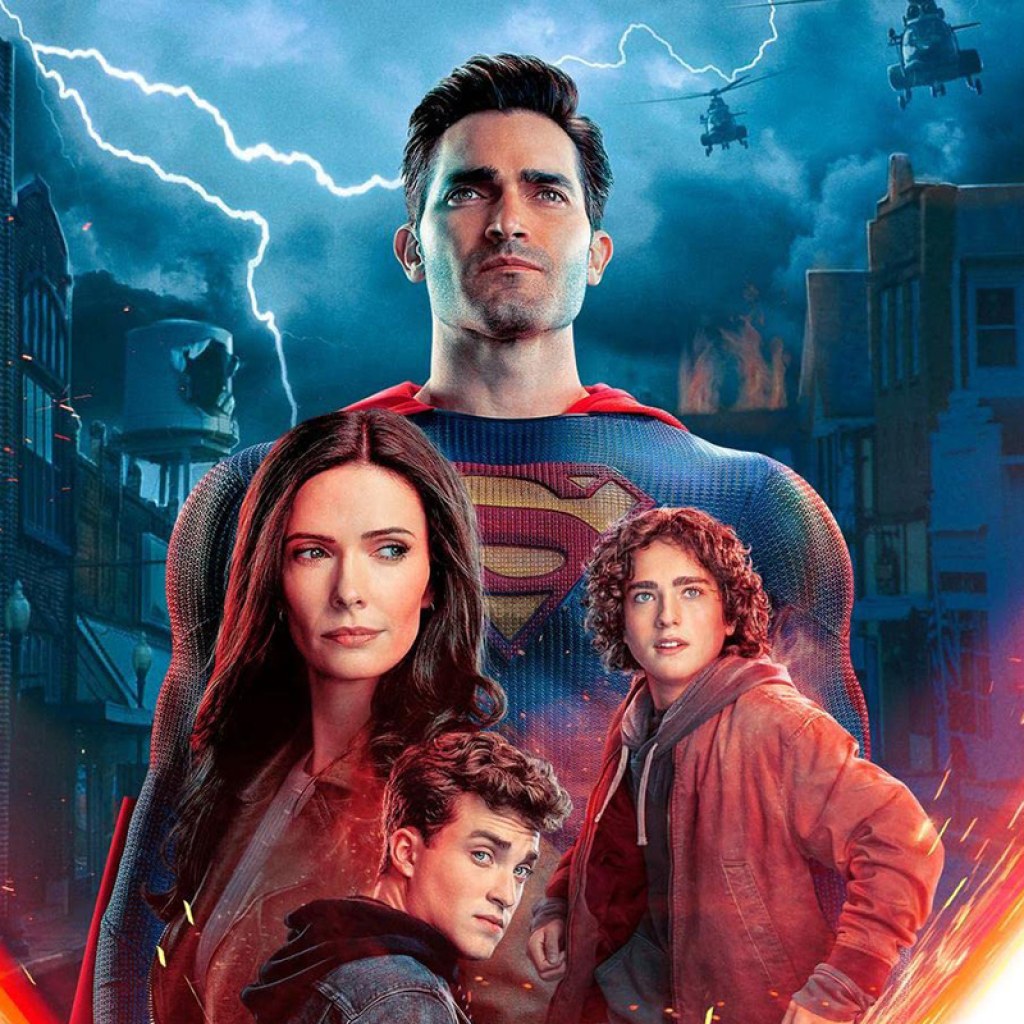
After two impressive seasons, Superman & Lois had earned a reputation as one of the most emotionally intelligent and thematically grounded superhero shows on television. The first season introduced us to a Superman reimagined through the lens of family. The second expanded on that foundation, plumbing deeper psychological terrain, pushing characters into morally grey territory, and experimenting boldly with multiverse storytelling. But Season 3, instead of continuing that thoughtful trajectory, feels like a sudden retreat from ambition.
This is not a terrible season. It’s not incoherent or unwatchable. But it is a textbook example of a show losing its clarity of purpose. Season 3 lacks focus, wastes strong actors on weak material, and jettisons much of the emotional richness that previously defined the series. Its central storyline, a cancer diagnosis, is admirable in concept, but undercuts itself with thin subplots, inconsistent character arcs, and a near-total absence of the thematic depth that once set the show apart.
In short: this season doesn’t feel like Superman & Lois anymore. It feels like a cheaper, flatter, and more formulaic version of itself.
The Narrative: Plot Without Purpose
Season 3 opens with a time jump. Several months have passed since the multiversal threats of Season 2, and the Kent family is enjoying a rare moment of peace. But that tranquility is shattered when Lois Lane begins experiencing symptoms that lead to a diagnosis of Stage 3 inflammatory breast cancer. This central arc could have been emotionally devastating in the best way: a grounded counterpoint to previous seasons’ cosmic threats. Unfortunately, it’s weighed down by a surrounding narrative that’s meandering, scattered, and oddly devoid of urgency.
The season’s villain, Bruno Mannheim, is introduced early on as the new Big Bad. Touted as Metropolis’ most feared crime lord and a shadowy manipulator of the criminal underworld, Mannheim initially seems promising. But instead of being a chilling, grounded threat, he quickly devolves into a generic mobster cliché. His motivations are hazy, his connection to other characters thin, and his actual impact on the Kent family negligible until far too late in the season.
Worse, Mannheim’s narrative, involving secret experiments with Kryptonian resurrection tech and the reanimation of dead villains, feels both unnecessarily convoluted and emotionally hollow. It’s a grimy, body-horror-adjacent subplot that feels ripped from another show entirely, clashing tonally with the very human story at the center.
Clark Kent / Superman – The Inert Man of Steel
Tyler Hoechlin has always excelled at portraying Superman not as an icon, but as a man: vulnerable, warm, principled, and just a bit dorky. In previous seasons, Clark juggled his heroics with fatherhood, community, and personal doubt. Season 3, however, gives him almost nothing to do.
Clark is pushed to the margins of his own show. The cancer storyline rightly centers Lois, but the writers fail to give Clark any meaningful emotional processing of her illness beyond a handful of strained conversations. He flies off to fight background villains, reacts to Mannheim’s activities, and occasionally comforts Lois, but the depth and nuance of his emotional life are missing. His internal conflict, if it exists, remains largely unexplored.
Worse, the Superman sequences, once intimate and visually impressive, become repetitive and weightless. The action choreography feels cheaper, and the emotional stakes that once grounded each confrontation are gone. Clark fights because the script needs him to. He worries because he’s expected to. He no longer grows, no longer evolves.
Lois Lane – A Noble Story Undercut by Weak Surroundings
The decision to depict Lois Lane battling cancer is, on paper, a bold and important one. Elizabeth Tulloch commits fully to the performance, and some of the season’s most powerful moments come from her interactions with her family, especially Jordan and Clark, in quiet, vulnerable scenes.
Yet for all her screen time, Lois’s journey never quite hits the emotional depth it aims for. The problem isn’t Tulloch’s acting, but the writing surrounding her. The show insists on tying her cancer arc to Mannheim’s experiments and Morgan Edge’s residual villainy, instead of letting it stand on its own as a powerful, grounded human story.
Rather than exploring Lois’s psychological reckoning: her fear, her sense of identity, her relationship with mortality, the show externalizes everything. We don’t get her diary entries, we don’t sit in her stillness, and we rarely see her break down in ways that feel unguarded. Instead, she is asked to solve a case, chase leads, and maintain plot momentum. She is the world’s most composed cancer patient, noble, yes, but emotionally unreal.
There are glimpses of what could have been: her decision to freeze her eggs before chemotherapy, her complicated reaction to a potential mastectomy, her final acceptance of vulnerability in the season’s closing episodes. But these moments are islands in a sea of wasted potential.
Jonathan and Jordan – Regression and Redundancy
The Kent boys were a highlight of Seasons 1 and 2. Their sibling rivalry, evolving powers, and struggles with adolescence gave the show its heartbeat. Here, however, both are sidelined and flattened.
Jordan, whose powers are continuing to develop, is portrayed as increasingly impulsive. But instead of exploring the psychological toll of becoming superhuman, the show reduces him to a petulant teenager who disobeys orders and creates conflict. His relationship with Sarah, once a source of vulnerability, becomes repetitive and uninteresting. They break up, they flirt, they argue… and nothing evolves.
Jonathan, meanwhile, feels completely adrift. After losing his powers and direction last season, one might expect the show to dig into his self-worth or give him a new, grounded arc, perhaps exploring what it means to be “just human” in a superhuman family. Instead, the writers recast the actor (a change that is fine in itself) and proceed to give him almost no meaningful story. He gets a girlfriend. He gets a job. He becomes a blank slate.
The brothers don’t even share many scenes. Their dynamic, once complex and moving, is neglected. It’s as if the writers didn’t know what to do with them once their initial arcs ran out.
Lana and Kyle – Repetitive Drama and Stagnation
In Season 2, the Cushing family was elevated to main-character status with great success. Their marriage troubles, Lana’s mayoral campaign, and Sarah’s mental health struggles were all compelling and well-executed. But in Season 3, their storyline devolves into a cycle of petty conflict, recycled beats, and diminishing returns.
Lana and Kyle’s relationship is dragged out endlessly. Will they reconcile? Will they move on? Each episode teases a new answer, only to revert to the status quo. Their screen time begins to feel like filler, especially given how little it intersects with the main plot.
Sarah, too, is given little to do besides sulk and react to Jordan’s superpowered secrets. Once a layered character with real interiority, she’s now written almost entirely in response to others.
By mid-season, the Cushing subplot begins to feel like a different show, and not a particularly interesting one. When they do intersect with the Mannheim plot late in the season, it feels forced and unearned.
Bruno Mannheim and Peia – The Villains Who Couldn’t
Bruno Mannheim had the potential to be the most grounded villain the show has tackled, a Lex Luthor by way of The Wire. Instead, he’s a cipher. We are told over and over how dangerous he is. We are shown glimpses of his ruthlessness. But he never feels like a threat.
His motivations are rooted in love for his dying wife, Peia, a metahuman with powerful sonic abilities. Their relationship is meant to humanize him, to make us question whether he’s truly evil or simply desperate. But Peia is introduced too late, her illness too quickly escalated, and their backstory too vague for it to carry emotional weight.
The idea of a villain acting out of grief is strong in theory. But in execution, Mannheim’s arc is all exposition and no investment. His climactic confrontation with Superman, in which he seemingly dies off-screen, lands with a whimper, not a bang.
Even the show’s final episode undercuts its villain’s importance, pivoting suddenly to Lex Luthor as the new major threat. Mannheim, once set up as a central figure, is discarded without ceremony.
Lex Luthor – A Too-Late Tease
Speaking of Lex: the season finale’s introduction of Michael Cudlitz as a new version of Luthor is both promising and infuriating. He’s magnetic, brutal, and clearly designed to be the show’s next big adversary. His scenes are excellent, but they’re few and too late.
Luthor should have been seeded much earlier in the season. By saving him for the final hour, the show admits that it no longer has confidence in the Mannheim arc. It tries to salvage momentum by reintroducing a legacy villain, but by then, it’s too late. It feels like a set-up for another show, not a payoff for this one.
Themes – Lost in the Noise
Where Season 1 explored fatherhood and responsibility, and Season 2 delved into fractured identity and duality, Season 3 has no clear thematic spine. The cancer arc should have grounded the season in questions of mortality, strength in vulnerability, and the cost of heroism. Instead, those themes are stated rather than explored.
There are vague nods to legacy, to sacrifice, to the limits of power, but they’re scattershot. Each subplot seems to exist in its own silo. The show no longer feels like a cohesive statement about anything. It’s just a series of loosely connected events.
Even Superman’s role in society, once a key philosophical question, goes largely unexamined. His presence no longer feels urgent. The world is not asking anything of him. And the show isn’t either.
Tone and Style – From Intimate to Generic
Visually, Season 3 looks cheaper than its predecessors. CGI is used more sparingly. Fight scenes are choppier. Lighting is flatter. The cinematography that once gave Smallville its amber warmth is now colder, more sterile.
Worse, the dialogue feels staler. Characters repeat the same sentiments episode after episode. “You’re not alone,” “We’ll get through this,” “You’re stronger than you think”, these once-moving mantras become empty, unearned platitudes.
The show seems afraid to sit in pain. It races past grief, skips over complexity, and clings to hopefulness in a way that feels forced, not earned. What was once a series that dared to linger in silence now rushes to resolve every moment.
Conclusion: The Season That Forgot What Made It Great
Season 3 of Superman & Lois isn’t a catastrophe. But it’s a quiet unraveling, a season where nearly every creative decision feels like a step backward. It abandons its strongest themes, sidelines its best characters, and replaces rich drama with flat exposition. It still has talented actors and the bones of a great show, but those bones are now barely holding up the weight of a bloated, inconsistent script.
There are glimmers of excellence. The depiction of Lois’s cancer, though often too sanitized, is important. Clark’s love for her is still palpable. And the introduction of Lex Luthor is promising. But these moments are fragments, not a full picture.
In the end, Season 3 feels like a show that lost its voice. And unless it finds it again, its legacy may be one of squandered potential rather than sustained brilliance.


 One Gay Astronaut
Leave a comment