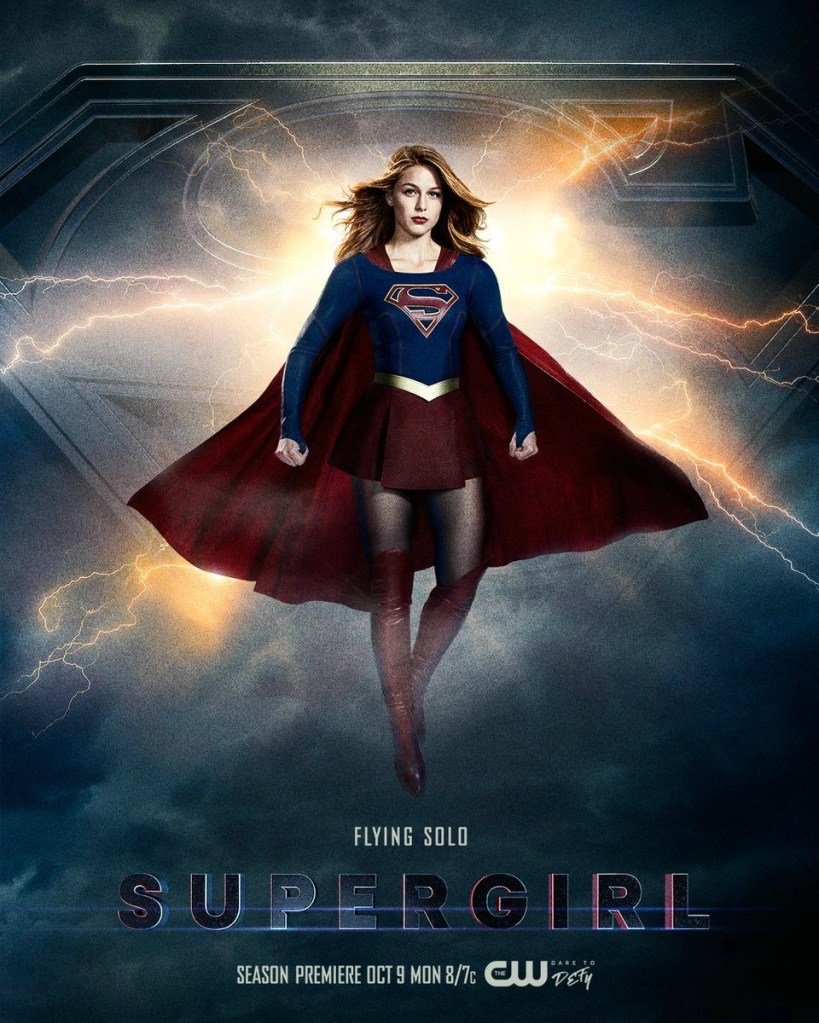
Season 3 of Supergirl arrives at a critical juncture in the series’ evolution. Following the warmth, optimism, and thematic cohesion of Season 2, the show faced the challenge of sustaining its hopeful tone while exploring higher stakes, darker threats, and more complex moral dilemmas. Season 3 succeeds in some of these ambitions spectacularly, offering emotionally rich storytelling and compelling character arcs, while occasionally faltering in pacing and coherence. The result is a season that is thematically ambitious, narratively uneven, but ultimately rewarding: a meditation on hope, responsibility, and the price of heroism in a morally gray world.
I. The Weight of Responsibility: Kara’s Evolving Heroism
From the outset, Season 3 positions Kara Zor-El at the crossroads of personal desire and moral duty. The season opener, “Girl of Steel,” underscores the emotional and ethical weight Kara must carry. No longer the fledgling hero uncertain of her place in the world, Kara now faces the consequences of her visibility: she is both a symbol and a target. The season’s recurring tension between public expectation and private vulnerability highlights a thematic exploration of heroism not as glory, but as endurance.
Melissa Benoist continues to anchor the series with a nuanced performance, balancing optimism with palpable fatigue. Kara’s interactions with Mon-El, her DEO colleagues, and civilians often revolve around the tension between action and empathy. The show emphasizes that true heroism involves choice: the courage to intervene without guarantees of success, and the emotional fortitude to persist despite failure. In this regard, Season 3 remains faithful to the series’ overarching philosophy: that hope is not naive but active.
What sets Season 3 apart is its willingness to explore the limits of Kara’s moral compass. Unlike Season 2, where compassion almost uniformly leads to positive outcomes, Season 3 tests the consequences of her empathy. Villains like Reign are not merely adversaries to be defeated; they are catalysts forcing Kara to confront her boundaries, responsibilities, and the ethical complexities of intervention. This tension provides the season with its thematic backbone: the burden of being a beacon of hope in a world that sometimes resists illumination.
II. Reign and the Exploration of Ideological Extremes
Reign, the season’s central antagonist, embodies both a literal and symbolic threat to Kara. As a Worldkiller and a manifestation of Kryptonian power corrupted by trauma, Reign challenges Kara on multiple levels. She is a mirror, reflecting the potential consequences of unchecked power and the destructive consequences of identity crises left unresolved. Unlike previous antagonists, Reign’s threat is existential: she is not motivated by greed or control alone, but by a belief that survival justifies devastation.
The narrative choices surrounding Reign are ambitious. The show uses her arc to explore themes of destiny versus choice, nature versus nurture, and the moral consequences of power. While these philosophical threads are compelling, they occasionally suffer from uneven pacing and rushed exposition. Reign’s backstory, though rich in potential, is condensed to fit within network television constraints, leaving some psychological depth underdeveloped. Nevertheless, her presence forces Kara and supporting characters into situations that demand ethical deliberation and emotional resilience.
Importantly, Reign is not merely a foil for Kara’s physical heroism. She challenges the optimism that Season 2 celebrated, forcing Kara to consider the limits of compassion and whether hope alone can avert catastrophe. This moral confrontation adds narrative weight, distinguishing Season 3 as a season that interrogates, rather than merely celebrates, the ethics of heroism.
III. Moral Ambiguity and the DEO’s Ethical Dilemmas
Season 3 extends its thematic exploration to institutional ethics, particularly within the Department of Extra-Normal Operations (DEO). Hank Henshaw, James Olsen, and Alex Danvers grapple with decisions that blur the lines between protection and overreach. The creation of alien task forces, covert operations, and morally ambiguous interventions complicates the show’s depiction of heroism. The DEO’s willingness to preemptively neutralize threats, sometimes at the expense of transparency, mirrors the season’s broader meditation on power: when does safeguarding others cross into manipulation or moral compromise?
Alex Danvers remains a moral anchor in this context. Chyler Leigh continues to convey a grounded, emotionally authentic journey, particularly as she navigates her relationships and leadership responsibilities. Her arc emphasizes that morality is not static: ethical decision-making is iterative, and leadership requires constant negotiation between personal values and systemic constraints. Alex’s experiences highlight the show’s commitment to exploring heroism as relational and situational, rather than purely individualistic.
Season 3 excels when it situates moral dilemmas within relational contexts. Scenes that depict the DEO debating surveillance measures, intervention strategies, or tactical priorities often feel less like exposition and more like explorations of conscience. The series effectively conveys the tension between ideals and pragmatism, providing viewers with a more nuanced portrayal of what it means to serve justice in a morally complex world.
IV. Love, Loss, and Personal Growth
Romantic and interpersonal dynamics remain central to Season 3’s narrative structure. Kara and Mon-El’s relationship evolves into one of the season’s most thematically significant threads, exploring the interplay between intimacy, power, and personal growth. Mon-El’s development from a carefree alien prince to a responsible partner and hero in his own right parallels Kara’s journey. Their arc emphasizes that love in the superhero context is not escapist fantasy, but a medium for mutual growth, compromise, and moral reflection.
Yet, the season does not shy away from the consequences of emotional entanglement. Conflicts arising from secrecy, differing priorities, and the stress of heroic responsibilities underscore the reality that love cannot exist in isolation from external pressures. These storylines are balanced by moments of genuine warmth, humor, and vulnerability, reinforcing the show’s commitment to portraying relationships as both challenging and meaningful.
Other interpersonal arcs, such as Alex and Maggie’s continued relationship development, and Lena Luthor’s navigation of moral alignment, further underscore the season’s emphasis on relational ethics. These narratives demonstrate that identity, trust, and moral clarity are intertwined with emotional intimacy. Characters are tested not only by external threats but by the complexity of their connections, resulting in a season that is emotionally textured and thematically ambitious.
V. Political Allegory and Social Consciousness
Building on Season 2’s exploration of xenophobia and societal fear, Season 3 deepens its engagement with political allegory. The series portrays the escalating tension between humans and aliens in National City as a reflection of real-world social anxieties. The narrative examines fear of the “other” not merely as a plot device, but as a cultural and ethical challenge that requires reflection, dialogue, and principled action.
While these allegorical elements elevate the series’ thematic ambition, the execution occasionally suffers from bluntness. Some episodes resort to exposition-heavy dialogue or simplified moral binaries that undercut the season’s otherwise nuanced explorations. Nevertheless, the show’s willingness to address social issues within the superhero framework is commendable. By integrating systemic injustice, prejudice, and fear into character-driven stories, Season 3 continues the series’ tradition of socially conscious storytelling.
VI. Character Complexity and Ensemble Dynamics
Season 3 succeeds in expanding the narrative potential of its ensemble cast. Characters such as Winn Schott, J’onn J’onzz, and Alex Danvers are granted more substantive arcs that intertwine with the season’s central themes. Winn’s technical genius and evolving moral compass highlight the tension between intellectual ability and ethical responsibility, while J’onn’s mentorship of newer alien characters underscores the challenges of cross-cultural integration and leadership.
Lena Luthor’s role is particularly notable. Katie McGrath’s performance imbues Lena with complexity and moral ambiguity, balancing the inherited legacy of villainy with genuine attempts at ethical integrity. Her narrative highlights the theme of choice: the past informs her, but does not define her, emphasizing the series’ continued exploration of agency, redemption, and moral resilience.
Mon-El’s presence further diversifies the ensemble dynamic. As a character whose growth parallels Kara’s, he provides a lens for exploring privilege, accountability, and personal transformation. These ensemble interactions reinforce the season’s thematic focus on relational heroism: ethical choices are rarely solitary, and the moral landscape is shaped as much by interpersonal dynamics as by external threats.
VII. The Struggle Between Optimism and Realism
One of the season’s central tensions is the interplay between optimism and realism. Season 2 was celebrated for its bright, hopeful tone, often portraying compassion as an unequivocal strength. Season 3 complicates this framework by placing Kara and her allies in situations where good intentions do not guarantee positive outcomes. The introduction of Reign and the political tensions surrounding alien integration force the characters to confront ethical complexity and the limits of intervention.
This tonal shift yields some of the season’s most compelling moments. Kara’s decision-making in morally ambiguous scenarios, her grappling with personal loss, and the sacrifices required to protect the greater good exemplify the maturation of the series’ philosophical lens. However, the oscillation between high-stakes darkness and moments of levity sometimes creates tonal unevenness. Episodes with significant plot density occasionally prioritize spectacle over introspection, temporarily diluting the thematic resonance.
Despite these inconsistencies, the season’s willingness to embrace moral ambiguity distinguishes it from its predecessors. Optimism is no longer a narrative given; it is hard-won, earned through struggle and reflection. This thematic evolution underscores the season’s ambition and reinforces Kara’s characterization as a hero capable of nuance, resilience, and ethical discernment.
VIII. Visual Storytelling and Production Design
Season 3 exhibits a marked evolution in visual storytelling. The cinematography employs a darker palette to reflect heightened stakes, yet retains warmth in moments of personal intimacy. Color symbolism is used to differentiate thematic spaces: reds and golds signal heroism and moral conviction, while shadows and muted tones underscore ethical uncertainty and threat. This visual language complements the season’s thematic exploration of moral complexity and emotional nuance.
Action sequences are more ambitious, with choreography that balances spectacle and narrative meaning. Kara’s physical confrontations with Reign, for example, are visually impressive, yet they also serve as metaphors for ethical struggle: the battles are not merely physical, but symbolic representations of the internal and external challenges of heroism. Practical effects and CG integration are largely effective, though some sequences occasionally reveal budgetary constraints. Nevertheless, the production design supports the season’s ambition and thematic intent.
IX. Narrative Pacing and Structural Challenges
A recurring critique of Season 3 is its uneven pacing. With multiple concurrent storylines: Kara and Mon-El’s relationship, Reign’s arc, DEO operations, political tensions, and ensemble character development, the season sometimes struggles to balance narrative threads. Certain mid-season episodes feel episodic or tangential, interrupting momentum and delaying payoff.
However, this structural complexity is also a strength. It allows the series to explore multiple facets of heroism simultaneously: emotional resilience, ethical dilemmas, relational growth, and societal impact. While pacing challenges occasionally dilute narrative cohesion, the thematic richness compensates, providing depth that episodic convenience rarely affords.
X. Emotional Resonance and Character Stakes
Season 3 succeeds most when it foregrounds emotional resonance. The personal stakes: Kara’s relationship challenges, Alex’s leadership struggles, Mon-El’s maturation, and Lena’s ethical dilemmas, are consistently compelling. Scenes of vulnerability, confrontation, and reconciliation are often the season’s most affecting moments, grounding the high-concept superhero narrative in relatable human experience.
The finale, “Make It Reign,” encapsulates this focus. Kara confronts Reign not only with strength but with moral clarity, demonstrating that heroism is inseparable from ethical conviction. The resolution balances triumph with cost: victories are hard-won, relationships are tested, and the future remains uncertain. This nuanced conclusion reflects the season’s thematic commitment to portraying heroism as a complex, morally engaged endeavor.
XI. Balancing Optimism with Complexity: The Season’s Core Thesis
Ultimately, Season 3 positions itself between the hopeful idealism of its predecessors and a more grounded, morally complex exploration of heroism. Optimism is tempered by realism, compassion by consequence, and personal desire by ethical responsibility. Kara’s journey embodies this duality: she remains a symbol of hope, yet her hope is now informed by experience, struggle, and moral reflection.
The season’s success lies in its thematic ambition. It interrogates heroism, empathy, power, and consequence without abandoning the core values that define Supergirl. While narrative unevenness and pacing issues prevent it from fully achieving the polish of previous seasons, the season’s emotional and ethical resonance ensures that it remains compelling, thought-provoking, and deeply human.
XII. Legacy and Thematic Contribution
Season 3 contributes to the broader Supergirl canon by deepening the series’ exploration of moral ambiguity, relational heroism, and the intersection of personal and societal responsibility. It challenges the simplicity of unambiguous optimism, demonstrating that hope must coexist with discernment, and compassion with accountability. Characters are tested in ways that highlight resilience, ethical judgment, and the complexity of leadership.
The ensemble cast delivers strong performances that reinforce these thematic concerns, and the narrative structure, while occasionally uneven, allows for the exploration of multiple dimensions of heroism. Through Reign, the DEO, and interpersonal dynamics, Season 3 interrogates the ethical stakes of power, illustrating that heroism is not only about action, but also about conscience and choice.
Final Thoughts: Between Light and Shadow
Supergirl Season 3 occupies a delicate space between aspiration and realism. It is a season of ambition: ambitious in narrative scope, character development, and thematic inquiry. Kara Zor-El remains the emotional and moral center, navigating a world that challenges her ideals, tests her relationships, and forces her to confront the consequences of her choices.
Balanced in its appraisal, the season’s achievements are significant: it deepens character complexity, engages with political and ethical dilemmas, and expands the moral landscape of the series. Its shortcomings: pacing inconsistencies and occasional narrative compression, are notable, yet they do not overshadow its core strengths.
In the end, Season 3 affirms that heroism is not a static triumph, but an ongoing negotiation between ideals and reality. Supergirl continues to champion compassion, courage, and hope, not as naive virtues, but as deliberate acts of moral and emotional engagement. The season leaves viewers with a hero who is more human, more complex, and ultimately more inspiring for it.
 One Gay Astronaut
Leave a comment