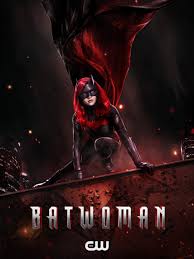
The first season of Batwoman marked an ambitious step for The CW’s Arrowverse, bringing the iconic Gotham vigilante, Kate Kane, into live-action television. With Ruby Rose in the titular role, Batwoman Season 1 attempted to craft a compelling narrative about identity, justice, and family, set against the dark and crime-infested backdrop of Gotham City. While the series had notable strengths, including its bold LGBTQ+ representation and a gripping villain in Alice, it struggled with uneven storytelling, inconsistent pacing, and behind-the-scenes turbulence that ultimately impacted its execution.
Plot Overview
The season follows Kate Kane, Bruce Wayne’s cousin, who returns to Gotham after years away and discovers that Batman has mysteriously vanished. When her ex-girlfriend, Sophie Moore (Meagan Tandy), is kidnapped by the menacing Alice (Rachel Skarsten), Kate is drawn into Gotham’s underworld. After donning the Batsuit, modified to fit her own identity, she steps up to protect the city, becoming Batwoman.
Over the course of the season, Kate struggles with balancing her personal life, dealing with her estranged father Jacob Kane (Dougray Scott) and his paramilitary organization, The Crows, while also trying to mend her broken relationship with her stepsister Mary (Nicole Kang). The show’s primary antagonist, Alice, is revealed to be Kate’s long-lost twin sister, Beth, setting up a deeply personal and emotional conflict that drives much of the season.
The season also introduces a host of supporting characters, including Luke Fox (Camrus Johnson), who serves as Kate’s tech-savvy ally, and Julia Pennyworth (Christina Wolfe), Alfred’s daughter and Kate’s occasional love interest. As the season unfolds, Batwoman’s identity is questioned, power struggles emerge, and the line between hero and vigilante becomes increasingly blurred.
Strengths
1. LGBTQ+ Representation
One of Batwoman’s biggest selling points was its commitment to LGBTQ+ representation. Kate Kane is an openly gay superhero, and the show does not shy away from tackling issues of discrimination, visibility, and acceptance. Ruby Rose, a gender-fluid actor, brought authenticity to the role, and the series was one of the few mainstream superhero shows to center an LGBTQ+ protagonist. The romance between Kate and Sophie added depth to the narrative, especially as Sophie grappled with staying closeted within the military-like ranks of The Crows.
2. Rachel Skarsten’s Alice
The standout performance of the season undeniably belonged to Rachel Skarsten as Alice. She brought a magnetic and unsettling energy to the role, balancing madness with tragedy. The backstory of Alice/Beth and her transformation from a kidnapped child to a vengeful villain was well fleshed out. Her interactions with Kate were some of the season’s most emotionally charged moments, elevating the series beyond standard superhero fare.
3. Gotham’s Atmosphere and Action Sequences
The show did a decent job of portraying Gotham City as a bleak, crime-ridden metropolis. Though it never reached the heights of Gotham (FOX) or The Dark Knight trilogy in terms of aesthetic, it had a recognizable noir feel. The action sequences, particularly Batwoman’s hand-to-hand combat, were well-choreographed and engaging, delivering solid superhero spectacle.
Weaknesses
1. Uneven Writing and Pacing
One of the major criticisms of Batwoman Season 1 was its inconsistent storytelling. While the overarching plot revolving around Alice had emotional weight, many episodic storylines felt generic and uninspired. Filler episodes dragged the momentum, and at times, the show leaned too heavily on exposition rather than dynamic storytelling. Some twists, such as Kate’s father Jacob’s shifting allegiances, felt underdeveloped.
2. Ruby Rose’s Performance
While Ruby Rose brought an undeniable presence to the role, her performance was divisive. Some praised her stoic, brooding portrayal of Kate Kane, while others found her acting flat and lacking emotional depth. Given that Batwoman is meant to be a compelling lead, her inconsistent delivery sometimes hurt the show’s ability to fully engage the audience.
3. The Crows and Secondary Villains
The Crows, Gotham’s private security force, were meant to serve as a morally gray entity, but they often felt like an underwhelming obstacle rather than a complex antagonist. Jacob Kane’s leadership was inconsistent, and his motivations were sometimes unclear. Additionally, the show’s secondary villains, such as Hush (Gabriel Mann), felt underutilized, missing the opportunity to create a richer rogues’ gallery for Batwoman.
Behind-the-Scenes Controversy and Impact
One of the biggest hurdles for Batwoman Season 1 was the turmoil surrounding Ruby Rose’s departure. After the season wrapped, Rose announced she would be leaving the role, citing personal injuries, difficult working conditions, and behind-the-scenes tension. This left the show in a precarious position, as Batwoman’s central character would need to be recast or replaced moving forward. The showrunners ultimately decided to introduce an entirely new character, Ryan Wilder (played by Javicia Leslie), for Season 2 instead of recasting Kate Kane.
This controversy undoubtedly overshadowed the show’s first season and may have impacted audience reception. Some fans felt that Kate’s departure undermined the emotional weight of the season’s narrative, particularly her relationship with Alice. The uncertainty surrounding Batwoman’s future added to the show’s challenges.
Final Verdict
Batwoman Season 1 was a bold but flawed entry into the Arrowverse. It had strong elements, including compelling representation, a standout villain in Alice, and exciting action sequences. However, its inconsistent storytelling, pacing issues, and lead performance concerns held it back from reaching its full potential. The behind-the-scenes turmoil only further complicated matters, making it difficult for the show to establish a stable foundation.
For fans of the Arrowverse, Batwoman offered an intriguing, albeit imperfect, addition to the franchise. While it struggled to find its footing, it laid the groundwork for a more refined and engaging continuation in subsequent seasons. Despite its missteps, it remains an important step in expanding the superhero genre’s diversity and representation.
Score: 6.5/10

 One Gay Astronaut
Leave a reply to timetravelinner1894bda68b Cancel reply