Section 1: Introduction and Context
After the mixed reception of Season 4, Arrow Season 5 was anticipated as a return to form for the series. The previous season’s foray into mysticism and magic, coupled with the controversial “Olicity” storyline, left many fans yearning for the grounded, gritty storytelling that initially defined the show. Season 5 aimed to recapture that essence, focusing on street-level crime, complex character development, and a formidable new antagonist.
The season introduces Adrian Chase, a district attorney with a hidden agenda, who becomes the central villain known as Prometheus. His vendetta against Oliver Queen is deeply personal, leading to a season-long psychological battle that challenges Oliver’s identity as both a hero and a person.
Section 2: Plot Overview
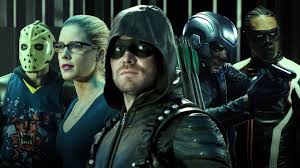
Season 5 picks up with Oliver Queen balancing his dual roles as the Mayor of Star City and the Green Arrow. With his original team disbanded, Oliver recruits new vigilantes to join his crusade against crime. These include:
- Rene Ramirez / Wild Dog: A brash and impulsive street-level vigilante.
- Evelyn Sharp / Artemis: A young archer with a complex moral compass.
- Curtis Holt / Mr. Terrific: A tech-savvy former Olympic athlete.
- Rory Regan / Ragman: A mystical hero with a tragic past.
As Oliver trains this new team, he faces a new threat in the form of Prometheus, a mysterious figure who targets him with a series of calculated attacks. The season delves into Oliver’s past, revealing that his actions as the Hood have had unintended consequences, leading to the creation of Prometheus.
Parallel to the present-day storyline, flashbacks continue to explore Oliver’s time away from Star City. This season’s flashbacks focus on his involvement with the Bratva in Russia, culminating in events that tie directly into the current narrative.
Episode Breakdown
Let’s break down some of the season’s most pivotal episodes — those that defined its arc and character development.
Episode 1: “Legacy”
The premiere smartly repositions Oliver as both a leader in Star City and a man trying to keep the vigilante flame alive solo. The death of Laurel still casts a long shadow. With Diggle and Thea both having stepped away, Oliver’s loneliness is palpable, making his decision to recruit a new team both necessary and emotionally driven.
The episode effectively re-establishes the show’s darker tone, ending with Oliver killing again — a controversial but thematically relevant move that speaks to the character’s regression and the dangers of isolation.
Episode 5: “Human Target”
This episode introduces the titular DC Comics character as a body double for Oliver, which allows for some great tension and misdirection. More significantly, it’s where Prometheus begins to manipulate events from behind the curtain, escalating the stakes and proving that he’s several steps ahead. It’s also where Diggle returns to the team, restoring a key part of Arrow’s emotional DNA.
Episode 8: “Invasion!” (Arrow’s 100th Episode)
As part of the larger crossover, “Invasion!” cleverly integrates an emotional alternate reality in which Oliver never boarded the Queen’s Gambit. It’s less about alien warfare and more a poignant reflection on loss, regret, and identity. Seeing Oliver reunited with his parents and Laurel offers a bittersweet glimpse into what could have been. It’s one of the show’s best exercises in nostalgia and introspection.
Episode 10: “Who Are You?”
Laurel appears to return from the dead, but it’s quickly revealed that she’s actually Earth-2’s Black Siren. This twist reintroduces Katie Cassidy to the series in a fresh way while also reminding viewers of Prometheus’ ruthlessness and his ability to use psychological warfare. It’s another layer in his campaign to unnerve and dismantle Oliver emotionally.
Episode 17: “Kapiushon”
This episode is a high point for both the season and the series as a whole. A bottle episode that focuses almost entirely on the battle between Oliver and Prometheus, it strips away subplots and secondary characters to focus on pure psychological deconstruction. Stephen Amell and Josh Segarra both deliver powerhouse performances.
When Oliver admits, through tears and agony, that he kills because he liked it — not just because he had to — it’s one of the most raw and honest moments in the series. It reframes five seasons of vigilante action in a new, morally complicated light.
Episode 20: “Underneath”
After Prometheus detonates the bunker, Oliver and Felicity are trapped together. What follows is a mixture of survival thriller and relationship drama. The confined setting forces the two characters to unpack their emotional baggage, with the tension between their past romance and current partnership finally addressed. It’s a slow-burning but well-acted episode that gives the season emotional weight.
Episode 23: “Lian Yu” (Finale)
The season finale is an explosive culmination of every theme, conflict, and narrative thread. With Oliver assembling a team of both allies and former enemies (including Slade Wilson/Deathstroke), the final battle on the island where it all began feels both poetic and inevitable.
The fight choreography is brutal and the stakes are higher than ever, but the emotional payoff is what elevates it. Prometheus’ ultimate move — killing himself to trigger the death of everyone Oliver loves — forces Oliver to confront the limits of control and sacrifice.
The cliffhanger ending — the island exploding with the fates of several characters left uncertain — is one of Arrow’s boldest endings.
Section 3: Character Development
Oliver Queen / Green Arrow
Season 5 presents a more introspective Oliver Queen. His dual responsibilities as mayor and vigilante force him to confront the dichotomy of his existence. The emergence of Prometheus compels Oliver to reflect on his past actions and the consequences they have wrought. This internal struggle adds depth to his character, showcasing his evolution from a lone avenger to a leader and mentor.
Adrian Chase / Prometheus
Adrian Chase stands out as one of the series’ most compelling antagonists. Unlike previous villains, Prometheus doesn’t seek power or domination; his goal is to dismantle Oliver’s psyche. His meticulous planning and deep understanding of Oliver’s history make him a formidable foe. The revelation of his true identity and motivations adds layers to the narrative, elevating the season’s tension.
Supporting Characters
- Felicity Smoak: Felicity grapples with the moral implications of her actions, especially after joining the hacktivist group Helix. Her journey explores themes of ethics and the cost of vigilantism.
- John Diggle: Diggle faces personal demons, including guilt over his brother’s death and his role in the military. His arc emphasizes redemption and the importance of family.
- Thea Queen: Thea’s struggle with her dark impulses and desire for a normal life adds emotional weight to the season.
- Quentin Lance: Quentin’s battle with addiction and his efforts to rebuild his life provide a grounded subplot that resonates with real-world issues.
Section 4: Highlights and Strengths
Return to Gritty Storytelling
Season 5 marks a return to the grounded, street-level crime-fighting that defined the early seasons of Arrow. The focus shifts back to hand-to-hand combat, moral ambiguity, and the complexities of vigilantism. This tonal shift is a welcome change, re-engaging viewers who were disenchanted by the previous season’s mystical elements.
Compelling Antagonist
Prometheus is widely regarded as one of Arrow‘s best villains. His personal vendetta against Oliver and psychological warfare tactics create a season-long tension that keeps viewers engaged. His ability to anticipate Oliver’s moves and manipulate events adds a layer of unpredictability to the narrative.
Character-Driven Narrative
The season excels in character development, particularly in exploring the consequences of past actions. Oliver’s mentorship of the new team members allows for growth and introspection. Each character faces personal challenges that contribute to their evolution, making their journeys relatable and impactful.
Strong Action Sequences
The fight choreography and action sequences in Season 5 are top-notch. The show returns to its roots with intense, well-executed combat scenes that showcase the skills of the characters. These sequences are not only visually impressive but also serve to advance the plot and character arcs.
Emotional Resonance
Episodes like “Kapiushon” and the season finale “Lian Yu” deliver emotional punches that resonate with the audience. These episodes delve deep into the psyche of the characters, particularly Oliver, and address themes of guilt, redemption, and identity.
Section 5: Weaknesses and Criticisms
Underdeveloped New Team Members
While the introduction of new vigilantes adds fresh dynamics to the team, some characters lack sufficient development. For instance, Evelyn Sharp’s betrayal feels abrupt due to limited exploration of her motivations. Similarly, Rory Regan’s departure from the team is sudden and lacks narrative closure.
Inconsistent Pacing
The season’s pacing fluctuates, with certain episodes feeling like filler. The buildup to major confrontations sometimes drags, affecting the overall momentum of the season. A tighter narrative focus could have enhanced the storytelling.
Flashback Fatigue
Although the Russian flashbacks tie into the main storyline, the flashback structure feels worn out by this point in the series. The constant shifting between timelines can disrupt the narrative flow and lessen the impact of the present-day events.
Limited Exploration of Supporting Characters
Characters like Thea and Quentin, who have been integral to the series, receive less focus this season. Their arcs feel sidelined, and their development is not as robust as in previous seasons.
Section 6: Final Verdict and Legacy
Arrow Season 5 is a significant improvement over its predecessor, returning to the elements that made the series compelling. The season’s emphasis on grounded storytelling, complex character dynamics, and a formidable antagonist revitalizes the show.
The psychological battle between Oliver and Prometheus stands out as a highlight, offering a nuanced exploration of heroism and accountability. The season’s willingness to confront the darker aspects of vigilantism adds depth to the narrative.
Thematic Cohesion
Season 5 returns Arrow to its core thematic foundation — one built on guilt, redemption, consequence, and identity. Throughout the season, the characters wrestle with their past decisions, and the show smartly aligns these personal battles with broader philosophical questions. Prometheus doesn’t just attack Oliver physically; he forces him to question whether he’s truly a hero or simply a killer in a mask.
The final realization that Oliver has never truly forgiven himself — that he’s been carrying a sense of toxic penance since his return from the island — serves as the emotional fulcrum of the season. It contextualizes past mistakes and relationships and gives a rich emotional anchor to the explosive events of the finale.
The show’s commitment to following through on these emotional arcs is admirable, particularly in a landscape where serialized storytelling can often drop threads. By the end of the season, Oliver is stripped of his team, forced to confront the consequences of his mission, and, metaphorically and literally, returned to where it all began: Lian Yu.
This cyclical return — the closing of the five-year journey that started with the island — provides one of the most satisfying and cathartic thematic resolutions in the series to date.
Legacy and Impact on the Arrowverse
Season 5 also marks a turning point in how Arrow connects with the broader Arrowverse. While the crossovers (like the ambitious “Invasion!” three-night event) still occur, the show distances itself from relying too heavily on superpowered antics. It uses these events to support character development rather than overshadow it. Oliver’s role in the crossover, for instance, allows us to see how he functions within a team of godlike beings, and how he remains the emotional and strategic core of any ensemble he joins — even among legends and speedsters.
Moreover, Season 5 set a high bar for the Arrowverse in terms of villain construction. Adrian Chase’s methodical, personal, and philosophical approach to antagonism influences the kinds of enemies future seasons of Arrow, The Flash, and even Supergirl would attempt to replicate — with varying degrees of success.
Chase proved that Arrow could make an enemy feel deadly without needing powers or world-ending schemes. His impact resonates across the franchise, establishing the value of character-driven villainy over sheer spectacle.
Section 7: Performances and Direction
Stephen Amell as Oliver Queen / Green Arrow
Stephen Amell delivers one of his finest performances of the entire series in Season 5. Unlike previous seasons that focused more on Oliver’s physical journey, this season zeroes in on his psychological and emotional state — and Amell rises to the challenge.
Key scenes, especially in episodes like “Kapiushon”, demand raw vulnerability and introspection. His confession that he enjoyed killing, and his fear that he is beyond redemption, require subtlety and restraint — and Amell nails those complex beats without leaning into melodrama. In quieter moments as Mayor Queen, Amell also captures the weariness of a man stretched thin by dual lives and mounting guilt.
He balances the grizzled wariness of a seasoned vigilante with flashes of humanity that prevent Oliver from becoming emotionally inaccessible. His chemistry with both his allies and enemies — particularly with Prometheus — elevates every conflict to something more personal and painful.
Josh Segarra as Adrian Chase / Prometheus
Josh Segarra steals the season. From his early scenes as the charming and efficient district attorney to the sinister manipulator Prometheus is revealed to be, Segarra walks a fine line between charisma and menace.
What makes Prometheus such an effective villain is not just his intellect or violence but his emotional intensity. Segarra plays Chase as a man completely convinced that what he is doing is just — a man consumed by a mission to unmask and undo Oliver Queen. His every scene crackles with tension. Segarra’s ability to match Amell emotionally, especially in their intense face-offs, is a testament to his layered performance.
Segarra humanizes Prometheus enough to keep him from becoming a mustache-twirling cartoon but maintains a terrifying unpredictability. In many ways, he becomes the dark mirror of Oliver — which is exactly what this season needed.
Emily Bett Rickards as Felicity Smoak
Felicity’s arc in Season 5 is divisive but ambitious. After Laurel’s death and her breakup with Oliver, Felicity is emotionally adrift. Emily Bett Rickards portrays Felicity’s slide into morally gray territory with skill. Her involvement with Helix shows a darker, more pragmatic side to the character, one that clashes with her usual optimism.
Rickards gets some strong material to work with in episodes like “Underneath”, where she confronts Oliver about their past and their current disconnect. She also navigates the season’s challenge of rebuilding Olicity’s dynamic with care and nuance. While the romantic chemistry isn’t forced back into the spotlight, Rickards and Amell work well together in portraying estranged partners trying to re-establish trust.
David Ramsey as John Diggle
David Ramsey continues to bring gravitas and grounded emotion to the series. Diggle’s story, which centers around guilt, atonement, and familial responsibility, gives Ramsey opportunities to show vulnerability and internal conflict. His scenes with his wife Lyla and his son add emotional depth, while his mentorship to the new recruits reflects his steadying presence on Team Arrow.
Ramsey’s chemistry with Amell remains a bedrock of the series, and Diggle’s consistent loyalty and integrity make him an audience anchor amid the chaos.
Willa Holland as Thea Queen
Although Thea’s role is somewhat reduced this season, Willa Holland makes the most of her screen time. Thea’s disillusionment with politics and vigilantism echoes Oliver’s own doubts, and Holland conveys this with subtlety. Her brief stints as Speedy remind us of her capabilities, but her internal conflict and desire for a more normal life drive home the toll that this double life takes on its players.
Supporting Cast
- Rick Gonzalez (Rene Ramirez / Wild Dog): Brings energy, attitude, and surprising emotional depth, especially in episodes exploring his daughter and past.
- Juliana Harkavy (Dinah Drake / Black Canary): A solid addition, showing strength, trauma recovery, and skill that positions her as a worthy successor to Laurel.
- Joe Dinicol (Rory Regan / Ragman): Memorable despite a short run. His mystical powers and emotional backstory provide early intrigue.
- Katie Cassidy (Black Siren): Deliciously menacing in her limited appearances. Cassidy clearly relishes the chance to play a darker version of her original character.
Direction and Showrunning
Under the stewardship of showrunner Marc Guggenheim, Season 5 maintains a clear thematic and emotional arc. The directing is sharp — episodes such as “Kapiushon”, “Underneath”, and “Lian Yu” are visually and emotionally distinct. The use of tight close-ups, desaturated color palettes, and hand-held camerawork gives the season an immersive, claustrophobic tone, matching the psychological themes.
The stunt choreography and blocking are as strong as ever, continuing Arrow’s reputation for gritty, practical action sequences. Directors also employ creative storytelling devices (dreams, flashbacks, hallucinations) without them feeling gimmicky.
Section 8: Visuals, Music, and Cinematography
Visual Style and Aesthetic
Season 5 of Arrow dials back the gloss and grandeur of previous seasons in favor of a more stripped-down, grounded look. The production design returns to dim alleys, neon-lit streets, and shadowy interiors — all emphasizing the show’s street-level focus.
The use of visual parallels — like cutting between Oliver in his suit and in the Green Arrow costume — helps underline the split between his identities. Similarly, the flashbacks to Russia use a colder, bleaker filter to accentuate the harshness of that period in Oliver’s life, while the bunker scenes grow increasingly claustrophobic as the season wears on, symbolizing the trap Oliver is falling into emotionally.
One of the standout visual achievements is the finale. Lian Yu is beautifully shot, blending natural landscape cinematography with tight, tension-filled action. The return to the island brings the story full circle — and it looks as good as it feels thematically.
Action Choreography
Arrow’s fight scenes have always been a highlight, and Season 5 ups the ante. The choreography is fast, fluid, and often brutal. One-on-one duels — especially Oliver vs. Prometheus — are choreographed with emotional stakes in mind. Fights aren’t just physical contests, but ideological ones.
The team fights involving the new recruits are chaotic but coherent, emphasizing their inexperience and evolving teamwork. Use of longer takes and practical stunts over CGI also helps maintain the show’s signature grit.
Music and Score
Composer Blake Neely continues to deliver a moody, emotionally resonant score. Season 5’s music subtly reflects Oliver’s emotional state — tense, brooding, but occasionally uplifting.
Prometheus’ musical theme is especially effective — haunting and ominous, often signaling his presence or influence even before he appears. The music enhances suspense and tension without being overbearing.
Neely also smartly weaves in callbacks to themes from earlier seasons, particularly during flashbacks and pivotal scenes on Lian Yu, creating a sense of continuity and closure.
Section 9: Conclusion and Final Score
Arrow Season 5 is a triumphant return to form. After the divisive detour of Season 4, the show recaptures its original magic by focusing on grounded storytelling, rich character arcs, and a villain who isn’t just a threat to the city — but to Oliver’s soul.
The season is emotionally honest. It’s brutal, introspective, and unafraid to show that heroism comes with scars. Adrian Chase’s campaign of psychological warfare is unlike anything the show has attempted before, and Josh Segarra’s performance makes Prometheus one of the best villains not just in Arrow, but in the entire Arrowverse.
While the season has its stumbles — underdeveloped side plots, uneven pacing, and some underused characters — it sticks the landing. The finale delivers a high-stakes, emotionally satisfying conclusion that honors the journey of the past five seasons.
With the Lian Yu flashbacks concluded, and the island literally in flames, Season 5 closes one chapter and opens the door to a new era. It is a season that understands what Arrow is at its best: a character-driven, morally complex action drama that explores what it means to wear the hood.
Final Score: 9/10
Pros:
- Strong central narrative arc
- Exceptional villain in Prometheus
- Powerful performances, especially from Amell and Segarra
- Thematic consistency and closure
- Return to gritty action and grounded tone
Cons:
- Some pacing issues and filler episodes
- Flashback format showing fatigue
- Supporting characters sometimes underserved

 One Gay Astronaut
Leave a reply to timetravelinner1894bda68b Cancel reply