Introduction
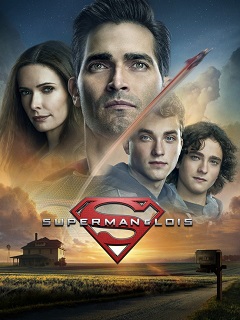
When Superman & Lois was announced as a new addition to The CW’s Arrowverse, skepticism was understandable. After nearly a decade of interconnected DC television shows, fans and critics alike were unsure whether another Superman story could offer anything new. How many times could the tale of Krypton’s last son be retold? What more could be said about Lois Lane, the intrepid reporter who’s always a heartbeat away from danger? But the answer arrived in an unexpected way: by focusing not on Superman the savior, but on Clark Kent the father. In that choice lies the soul of Superman & Lois Season 1.
Rather than offering just another superhero story punctuated by high-octane action and city-wide destruction, Superman & Lois turns inward, into the domestic sphere. The show asks what it means to be a hero not just to the world, but to your children. What it means to bear immense responsibility on two fronts — as a protector of humanity and as a parent trying to raise decent, kind, and stable kids in a chaotic world. Season 1 of Superman & Lois is a deeply emotional, sharply acted, and visually arresting reimagining of Superman’s story — one that may well stand as one of the most emotionally mature adaptations of the character ever made.
In this review, we’ll explore the season’s structure, character arcs, thematic underpinnings, performances, production quality, and its impact on the superhero genre. With 15 episodes of rich storytelling, there’s much to unpack — and plenty to admire.
The Premise: Reframing the Myth
Superman & Lois begins with a familiar tragedy — the death of Martha Kent. This loss draws Clark and Lois back to Smallville, along with their twin sons, Jonathan and Jordan. At its core, the show’s premise revolves around this family uprooting their lives in Metropolis and relocating to Clark’s hometown to find healing, stability, and purpose. But this return to Clark’s roots is also a strategic narrative move. Smallville isn’t just a backdrop; it’s a character in itself — a town filled with secrets, economic despair, and slowly unraveling trust in institutions, both journalistic and political.
The show quickly establishes that Superman’s most complex battles aren’t with alien invaders but with the challenges of modern fatherhood, fractured community ties, and the haunting legacies of family. Unlike other Arrowverse shows that thrive on constant crossover events and superhero team-ups, Superman & Lois detaches itself from the broader universe, focusing on creating a unique tone that’s more akin to prestige family drama than standard comic book fare. That independence allows the show to craft a more intimate narrative — and in doing so, elevate its storytelling.
Characters: Rewriting Archetypes with Depth
Clark Kent / Superman – A Hero Redefined
Tyler Hoechlin’s portrayal of Superman initially raised eyebrows when he debuted on Supergirl, largely because he wasn’t the centerpiece of that series. But in Superman & Lois, he steps into his own story, and his performance is nothing short of revelatory. Hoechlin’s Superman is not the all-powerful god-like figure some versions lean into. Instead, he plays Clark with humility, quiet strength, and a palpable sense of vulnerability. He’s a man who worries about being present for his sons, about whether honesty or secrecy is the right path, and about whether his actions truly serve the greater good.
This is a Superman who listens before he punches, who leads with compassion rather than command. It’s a version of the character that feels deeply human — and perhaps more relevant now than ever. Importantly, Hoechlin doesn’t try to reinvent Superman as brooding or edgy. Instead, he leans into the hero’s optimism, patience, and emotional steadiness, grounding the series in a moral center that never feels corny or outdated.
Lois Lane – More Than a Supporting Player
If Hoechlin’s Superman is the heart of the show, then Elizabeth Tulloch’s Lois Lane is the spine. From the first episode, she’s not just the brave reporter who uncovers the truth — she’s the moral compass, the emotional anchor, and the person who challenges Clark to be more than just the Man of Steel. Tulloch plays Lois with grit, intelligence, and vulnerability, balancing professional ambition with maternal ferocity.
What sets this version of Lois apart is how much screen time and narrative weight she’s given. She’s not just reacting to Superman’s actions; she has her own arcs, her own demons, and her own triumphs. Her decision to move back to Smallville, her takedown of corrupt business magnate Morgan Edge, and her struggle to support Jordan’s mental health while grieving her own miscarried child all combine to paint a rich, three-dimensional portrait of one of comics’ most iconic women.
Jonathan and Jordan Kent – The Inheritance of Power and Pain
The Kent twins, Jonathan and Jordan, are perhaps the most significant additions to Superman lore introduced in this series. Jonathan, the popular, athletic, and well-adjusted sibling, contrasts sharply with Jordan, who battles social anxiety, depression, and early symptoms of superhuman abilities. The show resists easy clichés — neither son is reduced to a trope. Instead, their sibling rivalry, mutual protectiveness, and distinct journeys form one of the season’s emotional cornerstones.
Jordan’s emergence as a superpowered teen forces Clark to re-evaluate how much of his Kryptonian legacy he can share. For Jonathan, the lack of powers becomes its own burden — a quiet exploration of worth and identity that’s no less compelling. The brothers’ arcs underscore the show’s larger themes of inheritance, legacy, and the balance between individual and familial destiny.
John Henry Irons – A Man of Steel in His Own Right
Introduced as “The Stranger” before being revealed as John Henry Irons from another Earth, this character offers one of the most emotionally compelling subplots of the season. On his world, Superman went rogue and murdered Lois — his wife. That trauma drives his mission in this universe, placing him in direct conflict with Clark before ultimately becoming an uneasy ally.
His arc raises profound questions about trust, trauma, and redemption. It also opens up the philosophical dilemma of Superman’s unchecked power — a fear that has long echoed in comic books and films alike. John Henry’s eventual acceptance of Clark’s virtue adds depth to both characters and provides a satisfying payoff to his journey of grief and suspicion.
Morgan Edge / Tal-Rho – A Villain Rooted in Legacy
Morgan Edge begins as a typical corporate villain, a charismatic manipulator buying out Smallville’s resources. But as the season unfolds, we discover he is actually Tal-Rho, Clark’s Kryptonian half-brother. Tal-Rho’s mission to resurrect Krypton by embedding alien consciousness into human hosts adds a sci-fi urgency to the season’s back half. But what makes him interesting isn’t just his plan — it’s his emotional core. He, too, is a child shaped by pain and abandonment. While his choices are reprehensible, they are rooted in desperation, identity crisis, and a yearning to belong.
In many ways, Tal-Rho is a dark mirror to Clark. Raised without love, stripped of human grounding, and consumed by legacy, he illustrates what Superman might have become without the kindness of the Kents. Their final confrontation is less about brute strength and more about ideological divergence — and that elevates the drama considerably.
Themes: Legacy, Identity, and the Modern Myth
Thematically, Superman & Lois thrives because it dares to explore timeless questions in a contemporary framework. Every character arc feeds into the show’s larger contemplations on identity, legacy, and the weight of expectations.
Parenthood and Vulnerability
Parenting is not a theme — it’s the show’s beating heart. The idea that Superman, the most powerful being on Earth, could feel helpless in the face of his child’s mental health crisis is perhaps the show’s most emotionally honest moment. Lois, too, faces her own heartbreak — a miscarriage she never fully processed. These moments create a show that treats emotional wounds as seriously as physical threats. Vulnerability is not weakness here; it’s a form of strength.
Small-Town Decay and Disillusionment
Smallville in Superman & Lois is no longer the idyllic town of Clark’s youth. It is economically fragile, politically fractured, and increasingly suspicious of outsiders. Through this setting, the show examines the erosion of community trust, the dangers of unchecked corporate power, and the moral compromises that arise from desperation. The town becomes a reflection of modern America’s anxieties — not in a heavy-handed way, but through the lives of its residents.
The Burden of Legacy
What do we inherit from our families, and what do we choose to become? This question animates nearly every character arc. Clark wrestles with how much of himself to pass down to his sons. Jordan wonders whether his powers define him. Tal-Rho seeks to restore a legacy he never understood. John Henry Irons struggles with the ghosts of a world destroyed. The result is a season steeped in introspection — one where the powers are secondary to the internal struggles they provoke.
Visual Style and Direction: Cinematic TV
From its very first episode, Superman & Lois differentiates itself visually from its Arrowverse peers. The show employs cinematic camera work, a muted but rich color palette, and stunning visual effects — especially during Superman’s flight sequences or in battle. The direction feels deliberate and polished. Wide shots of Kansas cornfields, detailed interior sets like the Kent farmhouse, and sweeping battle sequences elevate the series beyond its network television origins.
The show makes excellent use of practical effects and intimate framing, especially in family scenes. These aren’t just pauses between action — they are the emotional high points. When Superman soars into the stratosphere to destroy a collapsing nuclear reactor, it’s thrilling. But when he quietly listens to his son cry about feeling broken, it’s transcendent.
Structure and Pacing: A Steady, Emotional Unfolding
With 15 episodes, the first season takes its time to build momentum. The opening episodes are intentionally paced, introducing characters and planting seeds for future conflicts. Midseason, the show pivots from family drama to more traditional superhero fare with the emergence of John Henry Irons and the reveal of Tal-Rho. But even then, the narrative never forgets its emotional core.
Each episode balances action and emotion, with subplots that reward long-term investment. There are no throwaway episodes; everything connects. Some viewers may find the slow burn frustrating early on, but the payoff is substantial. By the finale, the show has earned every cathartic moment.
A Quiet Revolution: Breaking the Superhero Mold
Superman & Lois Season 1 represents a quiet revolution in superhero storytelling. It doesn’t chase spectacle for its own sake. It doesn’t rely on multiverse gimmicks or endless crossover cameos. Instead, it focuses on crafting a story where emotional stakes matter more than cosmic ones.
In doing so, it challenges the genre to grow up. Not to abandon heroics, but to contextualize them — to show that courage isn’t just facing a villain in a cape, but sitting down with your child to tell them the truth. That saving the world starts at home.
Conclusion: Why This Superman Matters
Season 1 of Superman & Lois is not just a successful debut — it’s a meaningful reinvention of the Superman mythos. By grounding its characters in relatable struggles, by elevating emotional honesty over spectacle, and by giving Lois Lane the spotlight she has long deserved, the show creates a version of Superman that speaks powerfully to our time.
This is a Superman for the present — hopeful but burdened, powerful but patient, imperfect but striving. And in an age of cynicism and spectacle fatigue, that kind of heroism feels not just refreshing, but necessary.
Superman & Lois Season 1 dares to say that love, family, and truth are the greatest powers of all. And in doing so, it becomes more than just a good superhero show. It becomes something rare: a story about heroes that helps us understand how to be better humans.


 One Gay Astronaut
Leave a reply to timetravelinner1894bda68b Cancel reply