Chapter 1: Introduction & Context
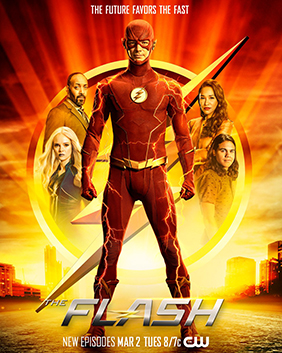
When The Flash entered its seventh season in 2021, it was already in a unique position within the Arrowverse. Arrow had ended the year prior, passing the symbolic torch of the franchise to Barry Allen and his team. Supergirl was preparing to wrap its own run, and Legends of Tomorrow was continuing down its irreverent path. For many viewers, however, The Flash had become the central spine of the Arrowverse, the series that held the shared universe’s original heart of optimism and comic-book sincerity.
Season 7 was never going to be an ordinary outing. The COVID-19 pandemic forced production to halt during Season 6, leaving its planned finale unfinished and pushing crucial arcs into Season 7’s opening episodes. This meant that the season bore the unusual weight of wrapping up one major story (the Mirrorverse arc with Eva McCulloch) before pivoting into entirely new narratives. That fracture created both challenges and opportunities.
At its best, Season 7 delivered emotional payoffs, gave Iris West-Allen more agency than ever, and allowed Team Flash to evolve in meaningful ways. At its worst, it stumbled through pacing issues, introduced villains with promise but little follow-through, and revealed the cracks of a show long past its early peak. The result was a season that is uneven, but thematically rich: one that wrestles with grief, identity, legacy, and what it truly means for Barry Allen to be the Flash.
Chapter 2: Overview of Story Arcs
Season 7 can be divided into three distinct arcs, each with its own tone and thematic emphasis.
1. The Mirrorverse Conclusion
Carried over from Season 6, the Mirrorverse storyline centered on Eva McCulloch, who replaced the “real” Iris with a mirror duplicate and sought to reshape the world through her distorted vision of justice. While the conclusion felt rushed due to pandemic-related constraints, it established an important motif: the power of identity and self-determination. Eva’s existential crisis, realizing she herself was a mirror duplicate, paralleled Iris’s strength in resisting manipulation and reclaiming her agency.
2. The Forces of Nature
Following Eva’s defeat, Barry and Iris inadvertently created new “forces” tied to the reborn Speed Force: the Strength Force (Fuerza), the Sage Force (Psych), and the Still Force (Deon). This storyline attempted to broaden the mythos beyond speedsters, reframing Barry and Iris almost as parental figures to these new metahumans. The arc was messy in execution but ambitious in scope, weaving themes of found family, responsibility, and the dangers of unchecked power.
3. The Godspeed War
The season’s climax came with the return of Godspeed, now split into warring clones seeking control of the original’s abilities. This arc leaned heavily on spectacle and action, culminating in the long-awaited return of Reverse-Flash as Barry’s unlikely ally. It also provided closure of sorts to Barry and Iris’s longing for a future with their children, crystallizing in Nora’s return and the introduction of Bart Allen.
Together, these arcs give Season 7 a fragmented but thematically consistent identity. Each explores the consequences of creation: whether technological (Eva), metaphysical (the Forces), or genetic/temporal (Godspeed and the West-Allen kids).
Chapter 3: Themes & Ideas
One of the strengths of The Flash has always been its thematic underpinnings. Season 7, while uneven in plot execution, continues to wrestle with weighty ideas.
Grief and Healing
The early episodes focus heavily on Barry’s grief. With Iris trapped in the Mirrorverse and the Speed Force seemingly gone, Barry is broken in both body and spirit. This grief-driven paralysis sets the stage for his growth across the season. Eva’s breakdown mirrors this theme, as she grieves for the life she thought she had. The show posits that grief is not something to be outrun but something to be lived with, integrated into identity.
Identity and Agency
The season obsesses over questions of identity. Eva struggles with being a mirror duplicate. Iris reclaims her independence as a journalist and leader. Frost separates herself legally and morally from Caitlin, demanding recognition as her own person. Even Godspeed’s clones embody a fractured self desperately vying for wholeness. At every turn, characters are forced to ask: who am I, really, and who do I choose to be?
Family and Legacy
The Forces arc directly reframes Barry and Iris as parental figures, whether they are ready for it or not. Later, the Godspeed storyline introduces Nora and Bart, tying their legacies to Barry’s choices in the present. The season insists that family is both chosen and inherited, messy but binding. Joe’s mentorship of Kramer also reinforces the idea that legacy is not just about children but about the moral influence we leave behind.
Evolution of Heroism
Season 7 raises the question: what does it mean for Barry to be a hero after six seasons of saving Central City? He can’t always rely on speed alone, sometimes leadership, empathy, and restraint matter more. The “parental” framing of the Forces pushes Barry beyond his usual heroics, demanding he nurture rather than simply defeat.
Chapter 4: Character Arcs
Barry Allen
Barry’s arc in Season 7 is defined by grief, resilience, and growth into a new kind of hero. He begins broken and nearly powerless, but gradually learns to embrace his role not only as protector but as father-figure and leader. His ultimate alliance with Reverse-Flash in the Godspeed battle underscores his maturity: Barry no longer fights simply out of anger or revenge but strategically, for the sake of the city’s survival.
Iris West-Allen
Season 7 belongs to Iris in ways previous seasons did not. After years of being sidelined, she emerges as a full protagonist, leading investigations, reclaiming her agency from the Mirrorverse, and grounding the team emotionally. Her role as co-parent of the Forces further emphasizes her equal stake in Team Flash’s future. The season finally begins to honor her as Barry’s equal partner rather than his emotional anchor alone.
Cisco Ramon
Cisco’s departure mid-season is bittersweet. His arc focuses on transition: learning that it is okay to step away and pursue happiness outside of heroics. His goodbye feels earned and emotional, even if fans lament his absence. Symbolically, his leaving represents the Arrowverse’s own transition, as legacy characters make way for a new generation.
Caitlin Snow & Frost
The split of Caitlin and Frost into two separate bodies dramatizes the theme of identity. Frost’s decision to accept punishment for her crimes rather than run highlights her growth from impulsive antihero to responsible individual. Caitlin, meanwhile, must learn to exist independently, no longer defined by her “other half.” This storyline is surprisingly poignant, though uneven in execution.
Chester P. Runk & Allegra Garcia
As newer members of Team Flash, Chester and Allegra represent the next generation. Chester’s enthusiasm and vulnerability bring fresh energy to the team, while Allegra’s struggles with her powers and family echo the show’s themes of responsibility and reconciliation. While not always smoothly integrated, both characters add youthful optimism that balances the weight of grief elsewhere.
Joe West
Joe, often the show’s moral compass, spends much of Season 7 mentoring Kristen Kramer. His insistence on empathy, restraint, and faith in redemption reinforces the show’s central optimism. Though his screen time is reduced, his presence remains essential.
Villains
- Eva McCulloch: Tragic and sympathetic, Eva is undone not by Barry but by her inability to reconcile with her fractured identity.
- The Forces (Psych, Fuerza, Deon): Unevenly written but conceptually rich, they function less as villains and more as misunderstood children.
- Godspeed (August Heart): Charismatic in concept but hollow in execution, Godspeed works best as a thematic device, a fragmented identity searching for wholeness, rather than a fully developed antagonist.
Chapter 5: Strengths of the Season
If one judges The Flash Season 7 not by its narrative coherence but by its emotional and thematic high points, its strengths shine through. This is a season filled with moments that remind viewers why they connected with these characters in the first place.
Performances Anchored by Grant Gustin and Candice Patton
Grant Gustin has long been the emotional anchor of the show, but Season 7 pushes him into new territory. Early episodes see Barry hollowed by grief, struggling to lead without his wife by his side. Gustin’s subdued, vulnerable performance makes Barry’s exhaustion believable, and his later evolution into a more measured, parental hero feels earned. Meanwhile, Candice Patton is arguably the MVP of the season. For years, fans complained that Iris was sidelined or underwritten. Here, she reclaims agency, leads investigations, and asserts her independence. Patton plays Iris with quiet strength and determination, balancing empathy with unyielding resilience. The chemistry between Gustin and Patton, always the heart of the series, feels more balanced than ever before, reflecting the show’s commitment to portraying their marriage as a true partnership.
A Focus on Character Growth
Another strength lies in the way nearly every character is granted growth, even if uneven. Frost’s arc of accountability, willingly accepting legal consequences rather than running, demonstrates the writers’ ability to weave moral lessons into superhero narratives. Cisco’s farewell provides closure while honoring his legacy, allowing him to exit on his own terms rather than through tragedy. Chester and Allegra, though not always seamlessly integrated, inject optimism and fresh perspectives, representing a younger generation of heroes. Joe’s mentorship of Kramer reinforces the series’ recurring theme: true leadership is about empathy, not just authority.
Ambitious Mythology Expansion
The Forces storyline, while flawed, must be acknowledged as a bold attempt to expand the show’s mythology. By introducing Fuerza, Psych, and Deon, the season moves beyond speedsters to grapple with cosmic, elemental forces of existence. This arc reframes Barry and Iris not just as heroes but as creators, almost mythic parental figures who must guide these beings toward self-understanding. The ambition of this narrative demonstrates a willingness to avoid creative stagnation, even if execution sometimes falters.
Emotional Resonance and Optimism
Despite its flaws, Season 7 retains the emotional sincerity that defines The Flash. The show has always been at its best when exploring love, hope, and the resilience of family. Whether it’s Cisco’s heartfelt farewell, Iris encouraging Barry to trust in love, or Team Flash rallying together against impossible odds, these moments resonate. Even the climactic Godspeed War, flawed in spectacle, delivers emotional payoff with the return of Nora and introduction of Bart, allowing Barry and Iris to glimpse the family they will one day have.
Thematic Cohesion
Finally, the season deserves credit for thematic cohesion. Though stories are fragmented, they all return to questions of identity, grief, and family. Whether it’s Eva grappling with her duplicate identity, Frost asserting her independence, or Barry and Iris stepping into parental roles, the season consistently circles around the idea that who we choose to be matters more than what we were created as.
Chapter 6: Weaknesses of the Season
For every emotional high, Season 7 suffers from structural and creative flaws that undercut its potential.
Pandemic-Induced Pacing Issues
The most obvious weakness lies in the pandemic’s impact on pacing. The Mirrorverse arc, which had built tension across Season 6, was forced into a rushed conclusion. Eva’s defeat, while thematically fitting, feels abrupt and anticlimactic. The transition into the Forces storyline is equally jarring, leaving viewers feeling as though they had begun a new season midway through the current one. This fractured structure prevents Season 7 from achieving the narrative cohesion of earlier seasons.
Uneven Execution of the Forces Storyline
The Forces arc is one of the most divisive in Flash history. Conceptually fascinating, expanding the mythos and reframing Barry and Iris as cosmic parents: its execution often feels clumsy. Character motivations shift abruptly, exposition dominates dialogue, and emotional beats sometimes feel forced. Psych and Fuerza are inconsistently developed, reduced to archetypes rather than fully realized characters. Only Deon achieves depth, with his Still Force arc providing intriguing narrative possibilities. Ultimately, the Forces storyline embodies the season’s tension: ambition without refinement.
Villain Weaknesses
No discussion of Season 7’s flaws can avoid the villains. Eva McCulloch, though sympathetic and conceptually rich, is undermined by the rushed conclusion of her arc. The Forces are not traditional villains, but their shifting role from antagonists to pseudo-children creates narrative whiplash. Godspeed, once one of the comics’ most compelling modern Flash villains, is underdeveloped in the show. The clone wars provide spectacle but little substance, reducing him to a generic threat rather than a psychological foil for Barry. Reverse-Flash’s sudden reintroduction in the finale underscores this weakness: the writers rely on him to inject gravitas where Godspeed cannot.
Inconsistent Tone
Season 7 frequently struggles with tone. Some episodes lean into heavy grief and existential questions, while others indulge in campy humor or rushed spectacle. The tonal whiplash is particularly noticeable between the intimate family drama of the Forces arc and the comic-book bombast of the Godspeed War. This inconsistency prevents the season from building sustained emotional momentum.
Visual and Budget Limitations
Finally, the season’s visuals betray its limitations. While understandable given pandemic constraints, the overuse of digital doubles, repetitive lightning fights, and underwhelming set pieces weaken the impact of major confrontations. When compared to the cinematic ambition of early seasons (Zoom’s menacing chases, Savitar’s armor), Season 7 often feels visually constrained. This creates a gap between the emotional weight of the story and the spectacle meant to support it.
Chapter 7: Comparison to Earlier Seasons & Arrowverse Context
To fully appreciate Season 7, it must be situated both within The Flash’s own history and within the broader Arrowverse.
Within The Flash
Compared to its golden age (Seasons 1 and 2), Season 7 lacks the narrative precision and compelling villains that made the show a breakout hit. Reverse-Flash, Zoom, and even Savitar offered psychological complexity and thematic mirroring of Barry’s own struggles. Godspeed, by contrast, is a hollow antagonist. Likewise, the early seasons thrived on tight storytelling, with each episode building toward a coherent arc. Season 7’s fragmented structure dilutes that momentum.
However, Season 7 does surpass later seasons in some respects. Season 4, for example, struggled with tonal imbalance and a bloated Thinker arc. Season 5 introduced Nora but often fell into repetitive patterns. Season 6 had promise with Bloodwork and Eva but was cut short. Season 7, despite flaws, manages to balance ambition with character-driven storytelling more effectively than some of its predecessors. Its thematic cohesion around identity and family gives it more weight than Season 4’s excesses or Season 5’s uneven plotting.
Within the Arrowverse
Beyond The Flash itself, Season 7 reflects the Arrowverse in transition. With Arrow gone, Supergirl ending, and Batwoman struggling to find footing, the shared universe no longer had the same coherence. The Flash was now its flagship series, tasked with carrying the emotional heart of the franchise. The season’s emphasis on legacy and family mirrors the Arrowverse’s own attempt to pass the torch to a younger generation of heroes. The introduction of Bart Allen, played with vibrant energy, reflects this generational shift.
Furthermore, the season reveals the challenges of sustaining long-running superhero television. Where Superman & Lois reinvigorated the genre with cinematic quality and tight focus, The Flash leaned on its established rhythms, sometimes to its detriment. Still, the sincerity of its optimism set it apart from darker, grittier Arrowverse entries, reaffirming its unique identity.
Symbolic Transition
Perhaps most importantly, Season 7 marks a symbolic transition. Cisco’s departure, Caitlin and Frost’s separation, and the introduction of Bart all signify generational handoffs. The show acknowledges its aging cast and mythology, preparing for a future beyond its original incarnation. In this sense, Season 7 operates as both continuation and soft reset, an attempt to honor what came before while gesturing toward what lies ahead.
Chapter 8: Final Reflections
When one steps back and views The Flash Season 7 in its entirety, what emerges is a season that is less about narrative triumphs or defeats and more about transition: transition for Barry and Iris, transition for Team Flash, and transition for the Arrowverse as a whole. It is a season defined not by one singular villain or moment but by a shifting landscape of grief, growth, and generational handoffs.
A Season of Survival and Adaptation
Season 7 is, in many ways, a product of its circumstances. The COVID-19 pandemic forced the creative team into compromises: storylines truncated, sets restricted, and large-scale battles reimagined. Against these odds, the season does not collapse. Instead, it adapts. The rushed Mirrorverse arc, the sometimes awkward Forces storyline, and the Godspeed finale all bear the marks of this struggle, yet the show’s emotional heart persists. If earlier seasons asked what Barry Allen could achieve at his peak, Season 7 asks what he and his team can endure when the world around them changes beyond recognition.
Emotional Payoff Over Narrative Precision
What ultimately makes Season 7 resonate, even for its critics, is its emotional sincerity. Episodes may stumble in plotting, villains may fall flat, but the emotional beats land with surprising consistency. Barry and Iris reestablish themselves as equals, Cisco receives a moving farewell, Frost embraces accountability, and Joe continues to embody quiet wisdom. These payoffs remind viewers that, even in decline, The Flash never loses sight of its human core.
The Shift Toward Legacy
Perhaps the most important achievement of Season 7 is its embrace of legacy. For years, the show teased Barry and Iris’s future children. This season brings Nora back while introducing Bart, allowing viewers to see the West-Allen family take shape. Their inclusion is more than fan service; it reframes the story of The Flash as one not just of a singular hero but of a lineage. This mirrors the larger Arrowverse transition: the original guard (Oliver Queen, Cisco Ramon, even Kara Danvers) stepping aside while a younger generation rises. Season 7, then, is not just another year of adventures but a symbolic bridge between past and future.
Identity as the Season’s Central Question
If one had to distill Season 7 into a single question, it would be: Who are you, really? Eva struggles with being a duplicate. Iris reclaims herself after the Mirrorverse. Frost separates from Caitlin and asserts individuality. Godspeed, fractured into clones, fights for a coherent identity. Even Barry must redefine himself, no longer just as the fastest man alive but as a leader and eventual father. Season 7 insists that identity is not fixed but chosen, forged through relationships and responsibility. This thematic cohesion redeems some of the season’s structural flaws, ensuring that even when stories feel disjointed, they echo a shared philosophical core.
The Imperfections That Cannot Be Ignored
Of course, Season 7 cannot escape critique. The villains lack impact, the Forces storyline frustrates as much as it intrigues, and the visual spectacle often feels diminished. For longtime fans, this season makes it clear that The Flash is no longer the sharp, tightly plotted series it once was. Some of its magic has faded. Yet even in acknowledging these flaws, one must also acknowledge the sheer resilience of a show in its seventh year, still capable of delivering moments of genuine emotion and thematic weight.
What Season 7 Means for the Future of The Flash
By the time the credits rolled on the Godspeed War, The Flash had firmly repositioned itself. No longer was it the story of a young Barry Allen discovering his powers. Instead, it had become a story of legacy, family, and endurance. Barry and Iris were no longer merely a couple: they were the foundation of a multigenerational saga. Team Flash was no longer a fixed set of faces but a living, evolving community.
This reorientation reflects a natural trajectory for any long-running superhero story. Characters must age, relationships must evolve, and new heroes must rise. In embracing this, however imperfectly, Season 7 ensures that The Flash does not stagnate. It may stumble, but it moves forward, honoring its past while gesturing toward its future.
Closing Thought
In the end, The Flash Season 7 is not a season to be measured solely by its villains or its plot twists. It is a season to be measured by its persistence, its heart, and its willingness to grapple with change. It teaches that grief can be endured, that identity can be reclaimed, and that legacies can be built even in moments of uncertainty.
If Season 1 was about the wonder of discovering speed, and Season 2 was about the terror of losing control, then Season 7 is about the wisdom of endurance. It is about slowing down, reassessing, and recognizing that the real victory lies not in running faster than light but in continuing to run at all, even when the path ahead is uncertain.
For a show deep into its run, that lesson feels not only appropriate but profound. Season 7 may never top the charts of The Flash’s greatest seasons, but it remains a vital chapter in the ongoing story of Barry Allen: a flawed, fragmented, but deeply heartfelt exploration of what it means to be a hero, a partner, and, above all, part of a family.


 One Gay Astronaut
Leave a reply to Gina Gao Cancel reply