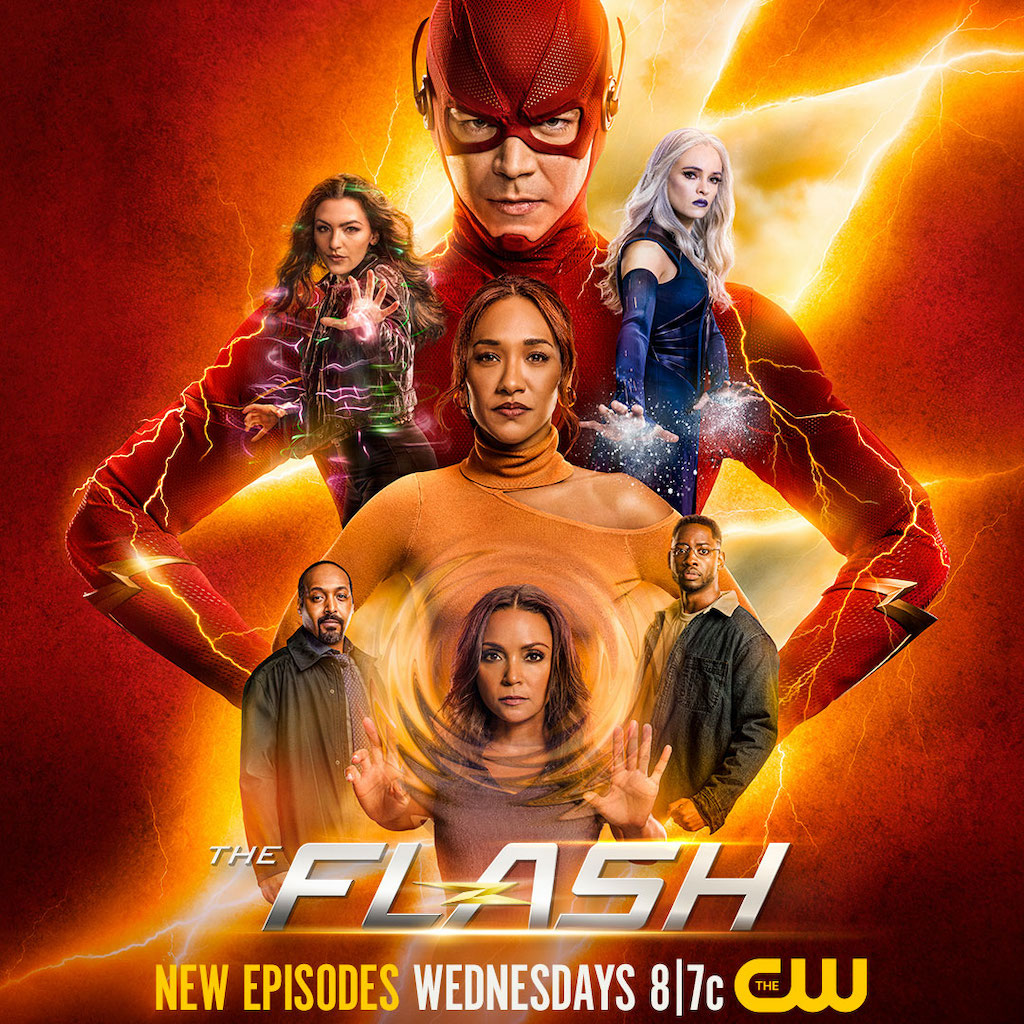
Introduction: A Show Running Against Time
Eight seasons in, The Flash has lived many lives. It began as a bright, hopeful story about Barry Allen coming into his powers, full of optimism, fun villains, and a sense of family at STAR Labs. Over time, the tone darkened, the scope expanded, and the show became as much about grief, trauma, and destiny as about speed. By the time we reach Season 8, we’re watching a series that’s weathered cast departures, Arrowverse crossovers, shifts in creative leadership, and the constant tug-of-war between serialized storytelling and episodic superhero TV.
Season 7 was divisive, with fans complaining about poor pacing, weaker villains, and a lack of emotional payoff. That meant Season 8 carried the burden of a comeback. Did it succeed? Well… yes and no. It’s not the triumphant return to the heights of Seasons 1 and 2, but it is a season that knows its emotional center. It stumbles often, but when it hits, it really hits. It reminds you why you care about these characters, even as it struggles with pacing and over-reliance on familiar beats.
Season 8 is broken into three main arcs: Armageddon, Death Revisited, and the Negative Speed Force/Time Sickness storyline, each with its own identity. Let’s take them one at a time.
Arc One: Armageddon – A Crossover Without Crossing Over
The Premise
The season kicks off with Armageddon, a five-episode event that feels like a crossover but technically isn’t. Instead of sprawling across multiple Arrowverse shows, all the action takes place within The Flash, with guest stars from other corners of the universe dropping by. This was both a smart way to navigate COVID restrictions and a bittersweet nod to the fading Arrowverse connections.
The central conflict: Despero, an alien warrior from the future, comes to 2021 claiming that Barry Allen will soon cause the destruction of Earth. His solution? Kill Barry before that happens. Naturally, Barry resists the idea that he’s destined to become some apocalyptic madman, and the arc becomes a test of his morality, his identity, and his role as a hero.
The Tone
This is easily the most “event-like” part of the season. The stakes are global, the guest appearances (Ray Palmer, Black Lightning, Alex Danvers, Ryan Wilder) bring nostalgia, and the action feels bigger. For long-time fans, it’s a bit of an Arrowverse reunion tour, though more restrained than Crisis on Infinite Earths.
The Strengths
- Barry’s Heroism Tested: The “Barry goes dark” trope has been done before, but Season 8 spins it slightly differently. Here, the fear isn’t that Barry chooses evil but that destiny might force his hand. Watching him resist that narrative felt very true to his character.
- Guest Stars: Ray Palmer’s return was joyful; Jefferson Pierce sharing scenes with Barry gave weight; Batwoman and Alex showing up grounded the idea of a still-connected universe.
- Despero’s Complexity: Despero isn’t just a generic alien brute. He’s convinced of his cause, making him a villain you can almost sympathize with.
The Weaknesses
- Pacing: Five episodes felt both too long and too short. Too long in the sense that some middle episodes dragged; too short in that Despero’s backstory and motivations never fully landed.
- Lack of Team Flash Balance: While Barry shines, characters like Allegra and Chester feel sidelined, and Iris’s role in this arc is surprisingly minimal given how central she becomes later.
- Event Fatigue: After Crisis, anything smaller feels underwhelming. Armageddon tries hard but doesn’t quite capture that once-in-a-lifetime spark.
Fandom Feel
As a fan, I loved Armageddon for the cameos and the sense of scale. But I also knew, deep down, that it wasn’t essential. It’s more of a victory lap, a way to say, “Yes, the Arrowverse still exists.” It entertained me, but it didn’t move me the way later arcs would.
Arc Two: Death Revisited, Grief as a Villain
The Premise
If Armageddon was about destiny, Death Revisited is about grief. The villain is Deathstorm, a cosmic entity born from grief and tied to Ronnie Raymond’s memory. He manifests as a terrifying, fiery wraith that feeds on sorrow. For Caitlin, this isn’t just another metahuman threat — it’s her past love returned in a twisted, cruel form.
The Emotional Core
This is where Season 8 finds its heart. The Deathstorm arc is dark, intimate, and emotionally raw. Caitlin’s proposal flashback with Ronnie is one of the season’s most beautiful moments: bittersweet and tragic. And when Frost sacrifices herself to defeat Deathstorm, it’s gutting. For once, the stakes aren’t about destroying the city or saving the timeline. They’re about losing someone you love and confronting the inevitability of death.
The Strengths
- Frost’s Sacrifice: Easily the most powerful beat of the season. Frost, who had grown from villain to beloved antihero, goes out a hero. It gives Danielle Panabaker incredible material and provides Team Flash with real grief.
- Deathstorm’s Horror Aesthetic: The visual design leaned into gothic horror, making this arc stand out stylistically. It felt eerie and personal in a way most villains of the week don’t.
- Themes of Grief: Every character processes Frost’s loss differently. Barry leans into leadership, Caitlin spirals, and the team struggles to move forward.
The Weaknesses
- Execution Gaps: While the emotional beats land, the arc’s resolution feels rushed. Deathstorm’s concept is brilliant but underdeveloped. He could have been a season-long villain.
- Team Dynamics: Once again, Allegra and Chester have small moments but never quite click into the emotional center of the story.
- Caitlin’s Repetition: Fans (myself included) felt frustrated at how often Caitlin’s arcs circle back to grief and tragedy. It’s powerful but risks becoming redundant.
Fandom Feel
This arc is the crown jewel of Season 8. It reminded me of early seasons, when the show balanced supervillains with deeply personal stakes. Frost’s death hit me hard, not because it was shocking, but because it was earned. This is the kind of storytelling that makes me forgive the show’s missteps elsewhere.
Arc Three: Negative Speed Force and Time Sickness
The Premise
The final arc ties together Iris’s mysterious “time sickness,” the Negative Speed Force, and (of course) the return of Reverse-Flash. The plot weaves in Nora and Bart, future kids who have to help Barry confront not just his nemesis but the cosmic balance of speed forces.
The Emotional Core
Where the Deathstorm arc dealt with grief, this arc is about inevitability. Iris’s time sickness threatens to erase her from existence. Reverse-Flash once again reemerges as Barry’s dark mirror. It’s heavy, mythological stuff, a mix of family drama and cosmic stakes.
The Strengths
- Iris’s Importance: Finally, Iris isn’t just a side character, she’s the heartbeat of the story. Her time sickness drives the season’s mystery, and her connection to Barry grounds the finale.
- Reverse-Flash’s Return: Yes, it’s repetitive, but Tom Cavanagh’s performance is still electric. Every time he appears, the show feels sharper.
- Family as Theme: Bringing Nora and Bart into the fight emphasizes legacy. Barry isn’t just running for himself, he’s running for the future.
The Weaknesses
- Repetition of Villains: Fans are divided here. Reverse-Flash is iconic, but after eight seasons, his returns feel predictable. The stakes don’t always hit as hard as they should.
- Time Sickness Underwritten: This storyline had been teased for ages, but the explanation and resolution felt hand-wavy.
- Overstuffed Finale: With Negative Speed Force, Reverse-Flash, Iris’s sickness, and family drama, the finale bites off more than it can chew.
Fandom Feel
I was torn on this arc. On one hand, it felt like classic Flash: Barry versus Thawne, love versus hate, destiny versus choice. On the other, I couldn’t shake the sense of déjà vu. Still, the family moments and Iris’s role gave it emotional weight. It’s not the best finale the show has ever done, but it’s far from the worst.
Character Spotlight
Barry Allen
Grant Gustin continues to ground the show. Season 8 gives him moments of doubt (Armageddon), grief (Death Revisited), and legacy (Negative arc). While the writing sometimes sidelines him in favor of side plots, Barry remains the emotional anchor.
Iris West-Allen
Candice Patton finally gets meatier material with the time sickness arc. For too long, Iris has been underused. Here, she becomes the key to the season’s mystery and the emotional payoff of the finale. Still, I wish she’d had a bigger role in Armageddon.
Caitlin Snow/Frost
Danielle Panabaker carries the Deathstorm arc. Frost’s sacrifice is a standout, but Caitlin’s return to grief-heavy storytelling feels repetitive. Still, her performance remains one of the show’s strongest assets.
Reverse-Flash (Eobard Thawne)
Tom Cavanagh proves, once again, that he is the definitive villain of the series. His presence elevates every scene. But by Season 8, even fans like me admit: enough is enough. The show relies too heavily on him.
Chester and Allegra
Both characters get small growth moments, but they still feel like side dishes rather than full meals. Chester’s nerdy charm and Allegra’s emotional beats are welcome, but neither anchors a story the way Cisco and Wells once did.
Supporting Players
Joe and Cecile get moments but often feel like filler. Nora and Bart bring youthful energy, though they’re more symbolic than central.
Themes of Season 8
- Destiny vs. Choice: From Despero’s warnings to Thawne’s return, Barry’s fight is always about whether he’s fated to fall or destined to rise.
- Grief and Loss: Frost’s death is the most resonant example, but Caitlin’s arc continues this thread. The show constantly circles back to the cost of being a hero.
- Family and Legacy: Nora and Bart’s involvement, Iris’s centrality, and Barry’s growth as a leader all reinforce that the future matters as much as the present.
Strengths of Season 8
- Emotional resonance in the Deathstorm arc.
- Strong performances from Grant, Candice, Danielle, and Tom.
- Ambitious structure with three distinct arcs.
- Nostalgia and Arrowverse connections in Armageddon.
Weaknesses of Season 8
- Pacing issues and rushed resolutions.
- Over-reliance on Reverse-Flash.
- Side characters underdeveloped.
- Iris’s time sickness explained too vaguely.
Final Fandom Verdict
Season 8 of The Flash is a rollercoaster. At its best, it delivers heartbreaking, powerful storytelling (Frost’s sacrifice, Iris’s centrality, Barry’s legacy). At its worst, it feels like it’s spinning its wheels with repetitive villains and rushed plots. As a fan, I was moved more than I was frustrated, but I couldn’t ignore the flaws. It’s a season defined by its middle arc, which stands as some of the strongest storytelling since the early years.

 One Gay Astronaut
Leave a reply to timetravelinner1894bda68b Cancel reply