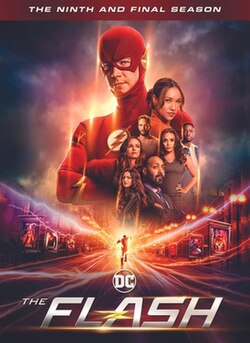
Introduction: The Final Sprint
Nine seasons. Nine years. If you’d told me back in 2014 that I’d still be watching a network superhero show this long, with the same lead actor, some of the same supporting cast, and a constantly shifting rogue gallery, I might have laughed. And yet, here we are. Season 9 of The Flash carries the heavy mantle of being the series finale, a bookend to a story that started with a young forensic scientist getting struck by lightning and discovering he could move faster than anyone else.
Season 9 is not perfect, but it understands what it has to accomplish: closure. It has to tie up Barry Allen’s journey as the Scarlet Speedster, give Iris a meaningful ending, honor Team Flash, reconcile or conclude long-running villain arcs (yes, Reverse-Flash again), and nod to the Arrowverse legacy. It has to answer the emotional questions that the audience has carried with them for nearly a decade: Who will Barry become? Can he finally have a normal life? And, most importantly, does the fastest man alive deserve a happy ending?
Unlike some previous seasons, Season 9 is leaner. There are fewer sprawling crossover events, fewer filler-of-the-week episodes, and fewer narrative detours. The show is aware that it’s racing toward a finish line, and it mostly keeps its focus on the emotional stakes and character arcs rather than trying to juggle too many subplots. That said, “leaner” doesn’t always mean “simpler” — the season still explores multiple arcs, confronts cosmic threats, and weaves in time-travel complications, all while balancing heart and spectacle.
Arc One: The Threat of the Negative Speed Force
Premise
The season opens with Barry grappling with the aftermath of Season 8’s cosmic chaos. The Negative Speed Force is unstable, causing ripples across time and space. Barry feels its pull, and soon the effects become personal: temporal anomalies threaten Central City, and Barry’s family — especially Iris — is at risk. Early episodes focus on Barry trying to stabilize the Negative Speed Force before it destabilizes reality entirely.
Emotional Core
This arc, though technical, is deeply human at its core. Barry isn’t just racing against cosmic forces; he’s racing against time itself — against the possibility of losing Iris, his children, and his life as he knows it. There’s a recurring theme here: the cost of being the fastest man alive. Barry has spent nearly a decade using his speed to save others, but in doing so, he’s exposed himself and his loved ones to ever-escalating danger. This arc emphasizes that heroism comes with sacrifice, and the consequences are unavoidable.
Key Characters
- Barry Allen: More reflective than in past seasons, Barry grapples with guilt, responsibility, and mortality. Grant Gustin carries a weight in this arc — his facial expressions, subtle hesitations, and moments of vulnerability remind us why he has been the heart of the series for nine years.
- Iris West-Allen: Candice Patton finally gets material that feels earned. Her role is central: she’s not just the emotional anchor for Barry, she’s the key to solving the Negative Speed Force crisis. Her intelligence, courage, and emotional honesty anchor the arc.
- Chester P. Runk & Allegra Garcia: Chester plays a crucial role in tech-based solutions, while Allegra demonstrates initiative and growth, proving that Team Flash has evolved beyond just Barry’s shadow.
Highlights
- The tension of time-travel complications is palpable. Temporal anomalies cause small, disorienting changes that affect characters personally, not just the city at large.
- Emotional scenes between Barry and Iris hit hard — fleeting moments where Barry admits fear, weakness, and doubt feel genuine.
- Visual effects are solid, especially for Negative Speed Force sequences, giving a tangible sense of speed and danger.
Weaknesses
- Some plot points feel rushed, particularly the scientific explanations of the Negative Speed Force. While fans can suspend disbelief, the narrative occasionally leans too heavily on exposition.
- Side characters like Chester and Allegra have improved roles, but the emotional weight is still almost entirely on Barry and Iris.
- A couple of the earlier episodes feel like they’re recapping prior cosmic threats, which is understandable for new viewers but slightly tedious for long-time fans.
Fandom Perspective
As a fan, this arc worked for me emotionally, even if the science got shaky. Watching Barry struggle against forces he cannot fully control reminded me of the early seasons’ tension between heroism and humanity. The Negative Speed Force, while a complex narrative device, becomes a metaphor for Barry’s own internal struggles: his fear of failure, his desire to protect loved ones, and his longing for a normal life. It sets the emotional stakes high for the season.
Arc Two: Reverse-Flash Returns – Legacy and Consequences
Premise
Of course, no Flash season is complete without a confrontation with Eobard Thawne. Season 9 doesn’t reinvent the wheel here: Reverse-Flash returns, leveraging the Negative Speed Force to manipulate time and challenge Barry like never before. But there’s a twist: Thawne isn’t just a villain for spectacle’s sake — he represents the cumulative failures and trauma Barry has endured over nearly a decade. The fight is cosmic, yes, but deeply personal.
Emotional Core
This arc is where the finale really hits its emotional high notes. The conflict with Reverse-Flash is not just about speed or villainy — it’s about legacy. Barry has always been haunted by Thawne, but this season emphasizes that the real stakes are family, time, and morality. Every decision Barry makes affects not just the present but the past and future. This arc forces him to confront whether he can finally break the cycle of violence and loss that Thawne represents.
Key Characters
- Barry Allen: Faces the ultimate test of wisdom, restraint, and courage. He has grown from the impulsive hero of Season 1 into a man capable of patience and strategic thinking — though still prone to the occasional rash decision.
- Iris West-Allen: Continues to shine as more than a supporting character. She directly influences Barry’s strategy against Thawne, demonstrating leadership, insight, and moral clarity.
- Bart and Nora Allen: Their inclusion isn’t just fan service. These next-generation speedsters provide perspective, showing Barry the consequences of his choices on the future. Their arcs underscore the season’s theme of legacy.
Highlights
- Tom Cavanagh’s performance as Thawne is electric, as always. Even in a later season, he commands the screen, balancing menace, charisma, and calculated cruelty.
- Emotional beats between Barry and his children make Thawne’s threat feel real and immediate. It’s not just about stopping a villain; it’s about protecting the next generation.
- Strategic heroism: Barry has grown beyond running fast and punching hard. He now plans, sacrifices, and thinks several steps ahead, reflecting the series’ maturation.
Weaknesses
- Predictability: Some fans might feel fatigued seeing Reverse-Flash again. His return, while dramatic, does repeat familiar beats from prior confrontations.
- Some episodes feel exposition-heavy, explaining speed-force mechanics and time-travel consequences at the cost of pacing.
- Supporting cast moments are limited. While Iris, Bart, and Nora shine, other long-time characters like Joe, Cecile, and Allegra have reduced presence.
Fandom Perspective
Despite the “we’ve seen this before” problem, this arc delivers emotionally. It’s satisfying to see Barry confront Thawne not just as a villain, but as a representation of all the seasons’ struggles — loss, grief, temptation, and sacrifice. The familial stakes add depth, making the arc feel more earned than previous Thawne appearances.
Arc Three: Closure and Legacy – The Heart of the Finale
Premise
The final stretch of the season focuses on resolution and closure. The Negative Speed Force is neutralized, Reverse-Flash is finally outmaneuvered, and Barry Allen confronts the ultimate question: Can he live a normal life without being a hero, without sacrificing those he loves for the sake of the world? This arc emphasizes the personal over the cosmic. It’s less about villains and more about legacy, family, and choice.
Emotional Core
This is where Season 9 truly shines. Barry and Iris have been through countless threats, but here, the focus is on them as a couple, as a family, and as the emotional core of Central City. The finale asks: What is life worth if it’s only spent running? Can Barry choose love over duty without abandoning his moral compass?
Key emotional beats include:
- Barry and Iris finally embracing the possibility of a life without constant crises.
- Nora and Bart understanding the weight of their father’s heroism and making peace with their future roles.
- Team Flash celebrating victories while mourning losses, particularly the sacrifices that have been required over nine seasons.
Key Characters
- Barry Allen: Achieves narrative and emotional closure. His arc comes full circle: from a young, eager hero driven by guilt and loss to a mature man who understands the cost of heroism and the value of ordinary life.
- Iris West-Allen: Gets the happy ending fans have long hoped for. She’s not just a love interest; she’s Barry’s equal, co-strategist, moral guide, and partner in life.
- Team Flash: Joe, Cecile, Chester, Allegra, and even older characters like Caitlin (through legacy and memory) get moments to shine, highlighting the ensemble’s evolution.
Highlights
- Emotional resonance is at its peak. Scenes of family, closure, and farewells land because they are earned, not forced.
- The season honors its history. Past villains, speedsters, and emotional arcs are acknowledged, giving long-time fans a sense of completion.
- The visuals and music enhance emotional beats. The finale balances spectacle with intimate character moments.
Weaknesses
- Some narrative threads feel brushed aside. Not all loose ends are fully resolved, particularly with secondary villains and side arcs.
- A few episodes are overly expository, summarizing past events for emotional impact rather than letting the story breathe.
- Barry’s transition to a “normal life” sometimes feels rushed, though it is narratively satisfying.
Fandom Perspective
For me, this arc worked beautifully. It reminded me of why I started watching The Flash: the humanity behind the heroics, the relationships that ground the cosmic chaos, and the hope that even a life spent running can end with a moment of peace. Season 9 doesn’t just tie up plot threads; it ties up hearts.
Character Spotlight: The Heart of Season 9
Barry Allen
Barry’s journey in Season 9 is ultimately about maturity, responsibility, and love. He finally achieves a balance between being a hero and being a man who can prioritize his family. His arc rewards fans who have followed him for nine years, emphasizing growth over spectacle.
Iris West-Allen
Iris’s evolution reaches its pinnacle. No longer a sidekick or damsel, she is the moral center, strategist, and emotional anchor of the story. Her agency, intelligence, and emotional depth shine, making the finale especially satisfying.
Reverse-Flash / Eobard Thawne
Thawne serves as the ultimate mirror to Barry’s growth. While he remains menacing and cunning, this final confrontation frames him as a culmination of Barry’s challenges rather than just a recurring villain. Cavanagh’s performance remains magnetic.
Team Flash
The ensemble shines in small but meaningful ways. Chester and Allegra display competence and growth. Joe and Cecile provide wisdom and emotional grounding. Even the children, Nora and Bart, contribute to the theme of legacy. The team feels cohesive, reflecting nearly a decade of shared history.
Themes of Season 9
- Legacy: Everything Barry does is framed by its impact on the future — his children, Team Flash, and Central City.
- Choice vs. Destiny: Barry confronts the idea that he can step off the treadmill of heroism and live life on his own terms.
- Family and Love: The emotional heartbeat of the season is family, both blood and chosen.
- Sacrifice and Reward: Heroism is costly, but the reward comes in meaningful relationships, closure, and personal growth.
Strengths of Season 9
- Focused narrative, avoiding filler.
- Emotional payoff for Barry, Iris, and the ensemble.
- Strong performances, particularly Gustin, Patton, and Cavanagh.
- Satisfying closure of long-term arcs and legacy.
- Balances spectacle with intimate emotional moments.
Weaknesses of Season 9
- Some secondary plots feel rushed or unresolved.
- Expository episodes slow pacing.
- Villain repetition (Reverse-Flash) still feels a little tired.
- Some ensemble characters are underused.
Conclusion: The Finish Line
Season 9 of The Flash is a series finale that mostly delivers. It isn’t perfect — there are pacing issues, minor narrative shortcuts, and a reliance on familiar villain beats. But what matters most in a finale is emotional resonance, and here, the show succeeds. Barry Allen’s journey is honored, Iris is given her due, and Team Flash is celebrated. The Negative Speed Force, Reverse-Flash, and time-travel complications are all framed through the lens of personal stakes, making cosmic threats feel intimate.
For fans like me who have watched every episode, laughed at the humor, cried at the losses, and marveled at the heroics, Season 9 is a satisfying conclusion. It’s a reminder that The Flash has always been more than speed, villains, or superpowers — it’s been about humanity, heart, and the people we run for. And after nine years, after countless seasons of highs and lows, that’s exactly the story I wanted to see finished.

 One Gay Astronaut
Leave a reply to timetravelinner1894bda68b Cancel reply